7 min read

Navigating the AI Transformation Tightrope: Balancing Innovation, Regulation, and Human Capital

Navigating the AI Transformation Tightrope: Balancing Innovation, Regulation, and Human Capital

The artificial intelligence landscape in late 2025 presents a complex picture of immense opportunity tempered by significant operational challenges. For business leaders, the path forward resembles a tightrope walk: on one side, the promise of unprecedented efficiency and competitive advantage from a strategic AI transformation; on the other, the risks of regulatory missteps, talent shortages, and flawed implementation. The era of speculative AI pilots is over, replaced by a strategic imperative to integrate intelligent systems into the core of the business. Yet, this integration is far from simple.

This week, we distil the most critical developments in the AI sphere into actionable intelligence. The patterns are clear: agentic AI is reshaping customer-facing roles, the talent gap remains a primary obstacle, and governance has shifted from a best-practice to a non-negotiable compliance mandate. Our analysis is tailored specifically for the decision-makers on the front lines of this transformation, from Operations and Technology Executives wrestling with infrastructure and security to Marketing Leaders striving for authentic engagement at scale.

This article provides a strategic framework for navigating these complexities. We will equip Growth-Focused CEOs, Sales Directors, and Customer Service Leaders with the insights needed to harness AI's power, mitigate its risks, and drive sustainable business value. For these leaders, understanding these trends is not just about staying informed—it is about making the critical decisions that will define their organisation's future.


Agentic AI: Revolutionising Sales and Customer Service, Responsibly

Image 1 Agentic AI Revolutionising Sales and Customer Service, Responsibly

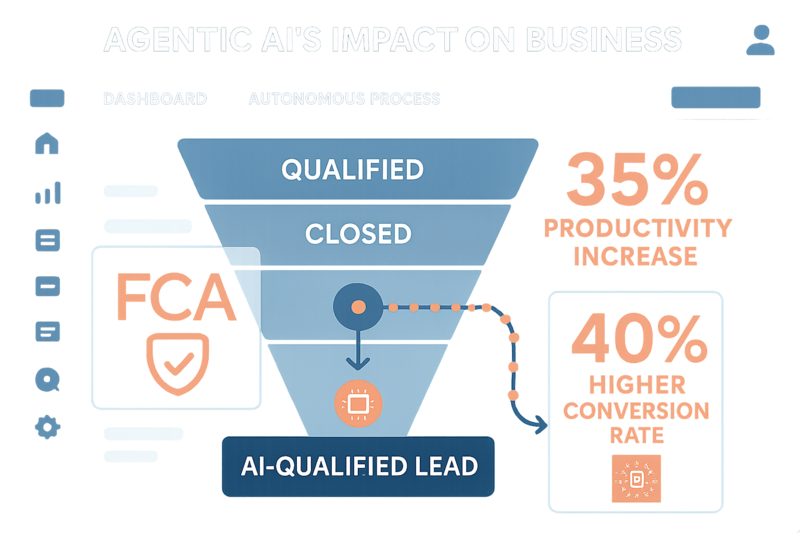
The rise of agentic AI—systems capable of autonomous action and decision-making—is no longer a future concept but a present-day reality, fundamentally reshaping the commercial functions of business. Major CRM platforms like Salesforce, Microsoft Dynamics, and HubSpot have now embedded autonomous agents capable of managing lead qualification, initial outreach, and sophisticated customer interactions without direct human intervention (Gartner, 2025). This move is democratising advanced automation, but it arrives with significant responsibilities. For sales teams, the impact is profound. Organisations successfully implementing AI in their sales processes report an average productivity increase of 35% (Forrester Research, 2025). AI-qualified leads are demonstrating a 40% higher conversion rate, reducing the average sales cycle by a remarkable 22 days (McKinsey & Company, 2025). In customer service, the story is similar. Multimodal AI systems now handle an estimated 60-70% of routine inquiries, with first response times decreasing by an average of 78% (Zendesk, 2025). However, this efficiency comes with a critical caveat: regulatory and ethical oversight. The UK’s Financial Conduct Authority (FCA) has introduced stringent guidelines requiring explicit transparency when AI interacts with customers in regulated sectors (FCA, 2025). Similarly, the full implementation of the EU AI Act now mandates clear disclosures and auditable decision-making trails for all customer-facing AI. Balancing the immense potential of these tools with the imperative of maintaining customer trust and compliance has become the central implementation challenge.

Strategic Implications

  • For Sales Directors: Evaluate agentic AI to automate top-of-funnel activities. By automating lead qualification and nurturing, you can liberate your sales team from administrative burdens, allowing them to dedicate more time to building relationships and closing high-value, complex deals.
  • For Customer Service Leaders: Implement a hybrid human-AI model. Leverage AI to provide 24/7 support for routine inquiries, but ensure a seamless and frictionless escalation path to skilled human agents for complex, nuanced, or emotionally charged issues.
  • For Growth-Focused CEOs: Champion the adoption of agentic AI as a powerful lever for scalable growth, but insist on an ethical-by-design implementation. Ensure that efficiency gains do not come at the cost of brand reputation or customer trust.
  • For Operations and Technology Executives: Prioritise the underlying data architecture. Implementing agentic AI requires robust data privacy, security, and governance frameworks to ensure every automated interaction is compliant with all relevant regulations.


The AI Talent Squeeze: Bridging the Skills Gap for Successful Implementation

Image 2 The AI Talent Squeeze Bridging the Skills Gap for Successful Implementation

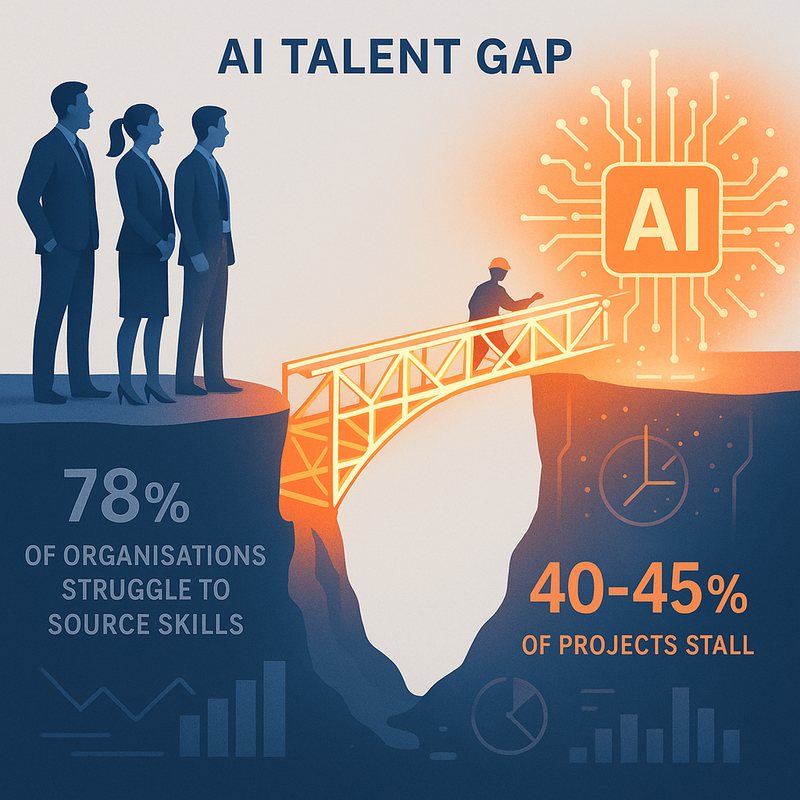
Despite a surge in AI training programmes, a persistent and acute shortage of experienced AI talent remains one of the most significant barriers to successful implementation. Industry reports indicate that 78% of organisations are still finding it difficult to source the right AI skills, with the demand for proficient machine learning engineers and AI ethics specialists exceeding supply by an estimated three-to-one ratio (McKinsey, 2025). This is not a simple problem of numbers; it is a crisis of experience. While many professionals now have foundational AI literacy, the market lacks individuals who can bridge the gap between theoretical data science and practical, scalable business application. This talent squeeze directly impacts project timelines and success rates. Recent industry surveys show that while improving, 40-45% of enterprise AI projects still fail to move beyond the pilot phase, often due to a lack of in-house expertise to manage the complexities of enterprise-wide deployment (Gartner, 2025). The primary implementation challenge has therefore shifted from technology acquisition to human capital development. Organisations are realising that waiting to hire the perfect candidates is an unsustainable strategy. The focus must turn inward, prioritising comprehensive upskilling and reskilling initiatives to build AI capabilities within existing teams. Overcoming internal resistance to change and instilling confidence in employees as their roles evolve are now critical success factors for any AI transformation roadmap.

Strategic Implications

  • For HR and Training Leaders: Design and deploy comprehensive AI upskilling programmes tailored to the specific needs of different departments. Move beyond general AI literacy to practical, role-based training on the tools your organisation is adopting.
  • For Operations and Technology Executives: Mitigate reliance on scarce talent by investing in mature AI operations (MLOps) platforms and model governance solutions. These tools can automate many of the monitoring and compliance tasks that would otherwise require specialist engineers.
  • For Growth-Focused CEOs: Frame investment in training and development not as a cost centre, but as a strategic necessity for securing your organisation's future relevance. AI-capable talent is a primary competitive differentiator.
  • For Marketing Leaders: Focus training initiatives on the practical and ethical use of generative AI tools for content creation, personalisation, and campaign analysis, ensuring efficiency is paired with strategic human oversight.


Navigating the Regulatory Maze: AI Governance as a Competitive Advantage

Image 3 Navigating the Regulatory Maze AI Governance as a Competitive Advantage

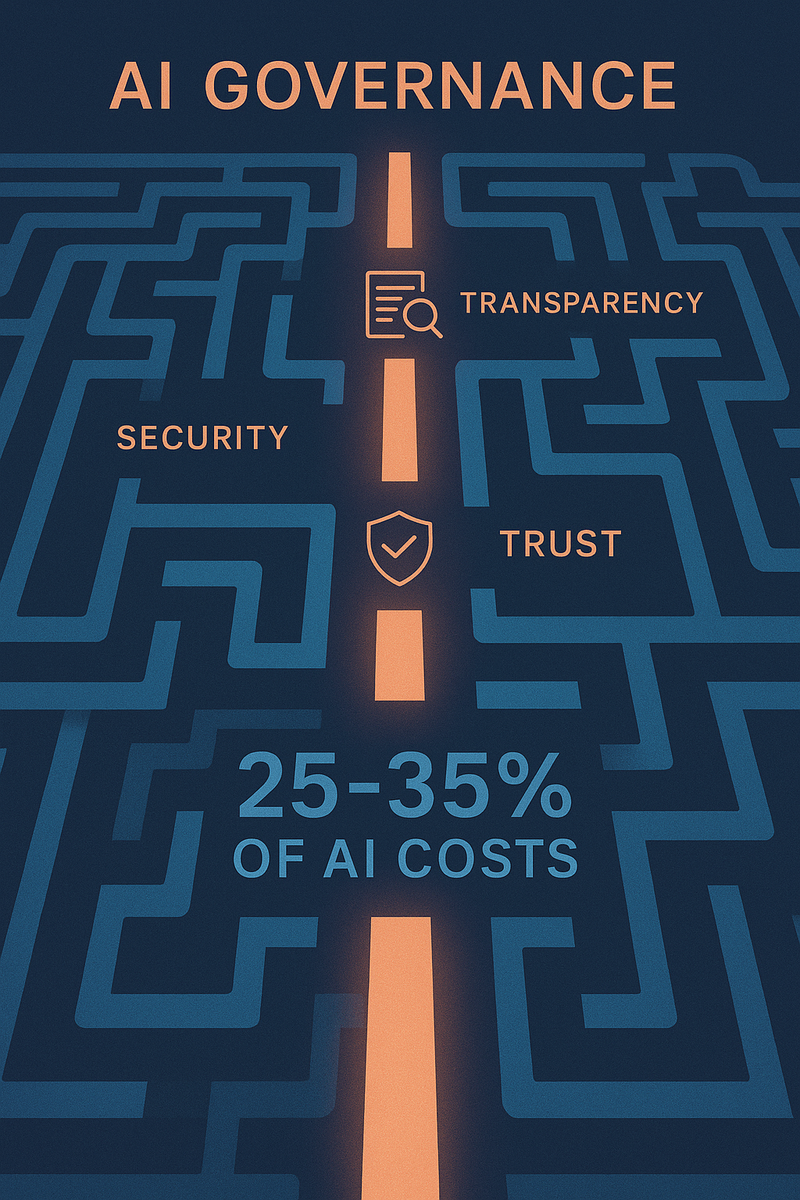
The era of AI regulation has fully arrived, transforming governance from an optional best practice into a mandatory pillar of any implementation strategy. With the enforcement phase of the EU AI Act now active and similar frameworks emerging globally, organisations are being compelled to build robust governance structures from the ground up. This has a tangible impact on budgets, with compliance-related activities now constituting 25-35% of total AI implementation costs, a significant increase from just two years ago (Forrester, 2025). This new reality requires a profound shift in mindset. Integrating compliance, legal, and risk management teams into the AI development lifecycle from its inception is no longer negotiable. The implementation challenge lies in creating frameworks that are rigorous enough to ensure compliance but agile enough not to stifle innovation. Instead of viewing governance as a restrictive burden, leading firms are reframing it as a powerful competitive differentiator. In a market where customers and partners are increasingly wary of opaque algorithms, the ability to demonstrate transparent, ethical, and compliant AI practices is a mark of trustworthiness and operational maturity. It builds brand equity and can become a key factor in attracting high-value customers.

Strategic Implications

  • For Operations and Technology Executives: Your immediate task is to implement and enforce robust data governance policies and security protocols. This is the foundation upon which all compliant AI systems are built, ensuring adherence to data privacy regulations.
  • For Growth-Focused CEOs: Champion AI governance as a strategic asset. Communicate to your board, investors, and customers how your commitment to responsible AI builds long-term value and positions your organisation as an industry leader.
  • For Marketing Leaders: Ensure every AI-powered marketing campaign is transparent, ethical, and fair. Actively work to eliminate bias in personalisation algorithms and avoid any practices that could be perceived as manipulative.
  • For Customer Service Leaders: Implement AI systems that are transparent by design. Chatbots and voice agents should be clear about their non-human nature, and there must always be an obvious and accessible pathway for customers to escalate to a human agent.


Generative AI: Balancing Efficiency with Authenticity

Image 4 Generative AI Balancing Efficiency with Authenticity

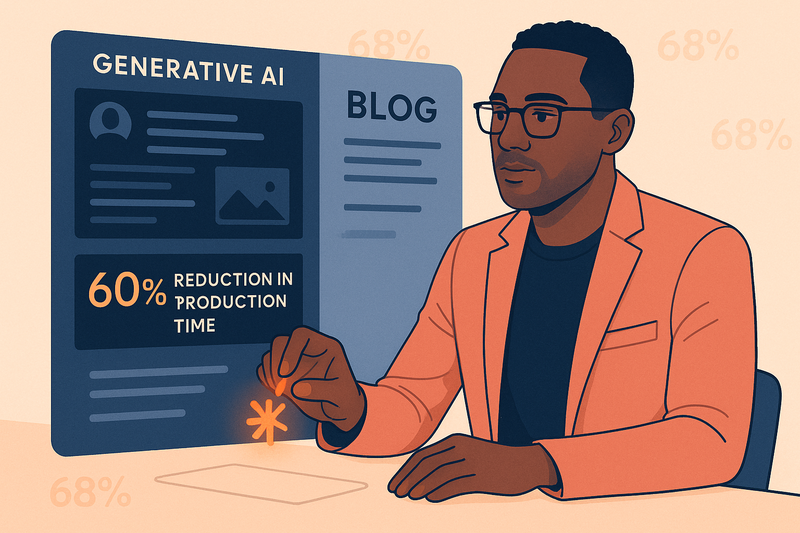
Generative AI has undeniably revolutionised content creation, with 68% of marketing professionals now using these tools for everything from blog posts to social media updates (HubSpot Research, 2025). The efficiency gains are staggering; on average, the time required for content production has been reduced by 60%, enabling teams to scale their marketing efforts in ways previously unimaginable. However, this newfound efficiency presents a strategic dilemma. The core challenge is mitigating the risks of brand dilution, factual inaccuracy, and a loss of authenticity. AI-generated content, without careful oversight, can become generic, misaligned with the established brand voice, or, in worst-case scenarios, produce confident-sounding ""hallucinations"" that damage credibility. Successfully harnessing generative AI requires a sophisticated governance strategy. Organisations must establish clear guidelines that define where AI can be used for ideation and first drafts, versus where human creativity and critical thinking are essential. The goal is to augment human talent, not replace it, creating a symbiotic relationship where AI handles production while humans provide the strategic direction and quality control that defines a trusted brand.

Strategic Implications

  • For Marketing Leaders: Develop a formal content governance strategy for generative AI. This framework should outline acceptable use cases, mandate human review processes, and provide clear guidance on maintaining a consistent and authentic brand voice.
  • For Growth-Focused CEOs: Empower your teams to explore generative AI's potential to scale content marketing, but ensure they have the frameworks for quality control to protect the brand's integrity.
  • For Operations and Technology Executives: Invest in platforms that can help detect and mitigate bias in AI-generated outputs, ensuring the systems in use align with your company’s ethical AI principles.
  • For Customer Service Leaders: Use generative AI to build and maintain internal knowledge bases. However, every piece of customer-facing information generated by AI must be rigorously vetted for accuracy by human experts before deployment.


Predictive Analytics: From Acquisition to Intelligent Retention

Image 5 Predictive Analytics From Acquisition to Intelligent Retention

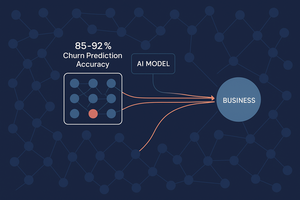
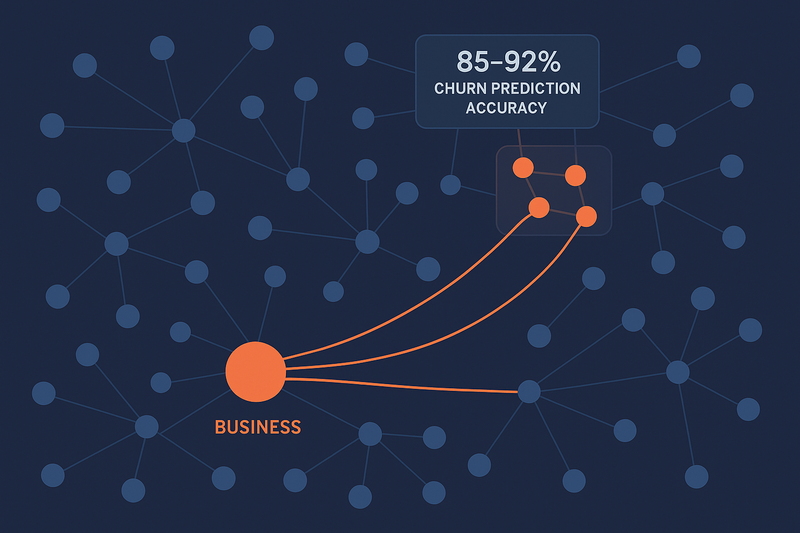
The capabilities of predictive analytics have matured to a point where they are fundamentally altering business strategy. No longer just a tool for optimising marketing spend, advanced AI models are now enabling a crucial pivot from a relentless focus on customer acquisition to a more profitable strategy of intelligent, proactive retention. The accuracy of these models is the driving force behind this shift. Modern machine learning systems can now predict customer churn with 85-92% accuracy, analysing thousands of behavioural signals to identify at-risk accounts long before they show obvious signs of leaving (McKinsey, 2025). This allows organisations to move from reactive ""save"" teams to proactive engagement strategies. This capability is directly impacting the bottom line, as companies using AI-driven personalisation report increases in conversion rates of 20-35% (Forrester, 2025). The primary implementation challenge, however, remains a foundational one: data. The predictive power of any AI model is entirely dependent on the quality, completeness, and accessibility of the data it is fed. Unlocking the full potential of predictive AI requires a strategic commitment to building a clean, unified, and accessible data infrastructure.

Strategic Implications

  • For Marketing Leaders: Use predictive insights to develop hyper-personalised retention campaigns. Target at-risk customer segments with tailored offers and content designed to address their specific pain points and reinforce value.
  • For Sales Directors: Apply predictive analytics to the front end of the sales cycle. Use AI-powered lead scoring to identify prospects with the highest probability of converting, allowing your team to prioritise their efforts and focus resources effectively.
  • For Customer Service Leaders: Leverage predictive models to anticipate customer needs before they arise. By identifying patterns that precede a support ticket, your team can proactively reach out with solutions, turning a potential negative experience into a positive one.
  • For Growth-Focused CEOs: Integrate predictive analytics into your highest level of business strategy. Use insights on customer lifetime value and churn risk to inform everything from product development to long-term investment decisions.


Additional AI Developments This Week

  • AI-powered sales coaching is now mainstream. Real-time guidance tools are becoming a standard part of the sales technology stack, analysing calls and providing representatives with instant feedback to improve performance.
  • Sales intelligence platforms are seeing explosive growth. The market for AI tools that provide predictive insights and competitor intelligence has grown by over 50% in the last year as organisations seek a data-driven edge.
  • Multimodal AI improves customer query handling. Advanced AI systems that can understand and process information across text, voice, and image channels are now resolving complex customer queries more effectively.
  • Dynamic pricing optimises retail margins. Retailers are increasingly using AI to adjust pricing in real-time, responding to shifts in demand and inventory to improve profit margins by as much as 15-20% (Deloitte Global, 2025).
  • New standards for AI hallucination detection. The Customer Service Industry Council has established the first official standards for detecting and mitigating factually incorrect outputs from generative AI systems, a critical step toward safer implementation.
AI for Operations and IT: How UK Businesses Are Automating with AIOps

AI for Operations and IT: How UK Businesses Are Automating with AIOps

For UK operations and IT teams, the pressure is mounting. Teams juggle alert fatigue (75% of IT teams experience this monthly), tool sprawl (100–300...

Read More
AI for Supply Chain and Procurement: How UK Businesses Are Optimising Operations

AI for Supply Chain and Procurement: How UK Businesses Are Optimising Operations

AI for Supply Chain and Procurement: How UK Businesses Are Optimising Operations Artificial intelligence is reshaping how UK businesses forecast...

Read More
AI for Real Estate: How UK Property Professionals Are Using Artificial Intelligence

AI for Real Estate: How UK Property Professionals Are Using Artificial Intelligence

Artificial Intelligence is reshaping how UK real estate professionals operate. From predictive property valuations to compliance-driven tenant...

Read More