9 min read

AI for Supply Chain and Procurement: How UK Businesses Are Optimising Operations

AI for Supply Chain and Procurement: How UK Businesses Are Optimising Operations
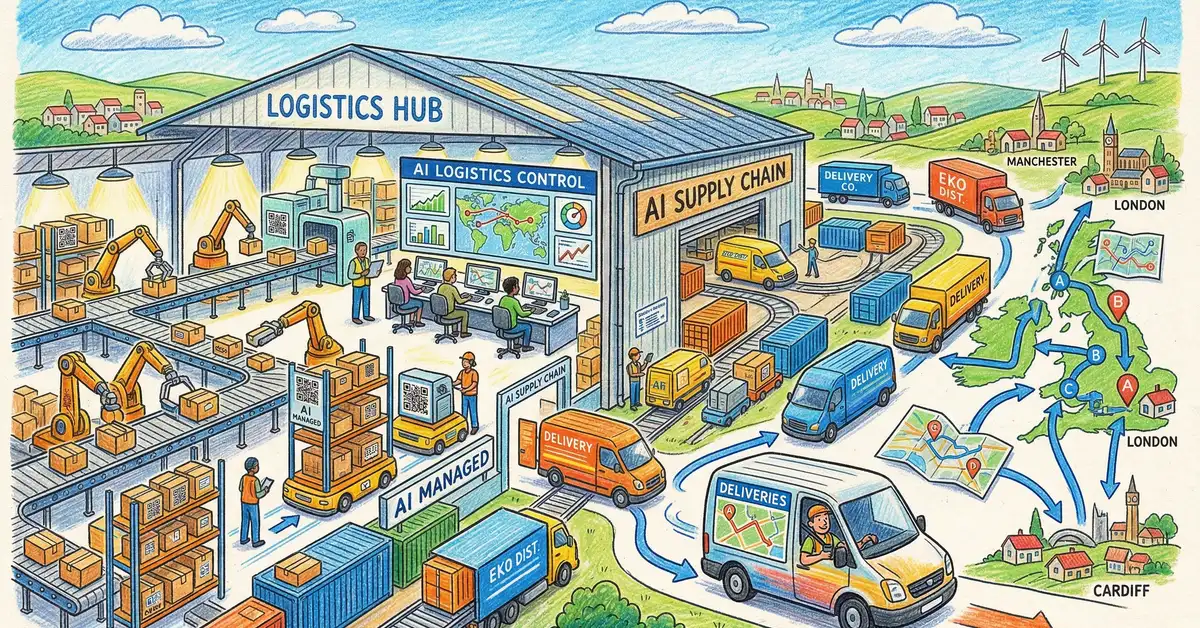
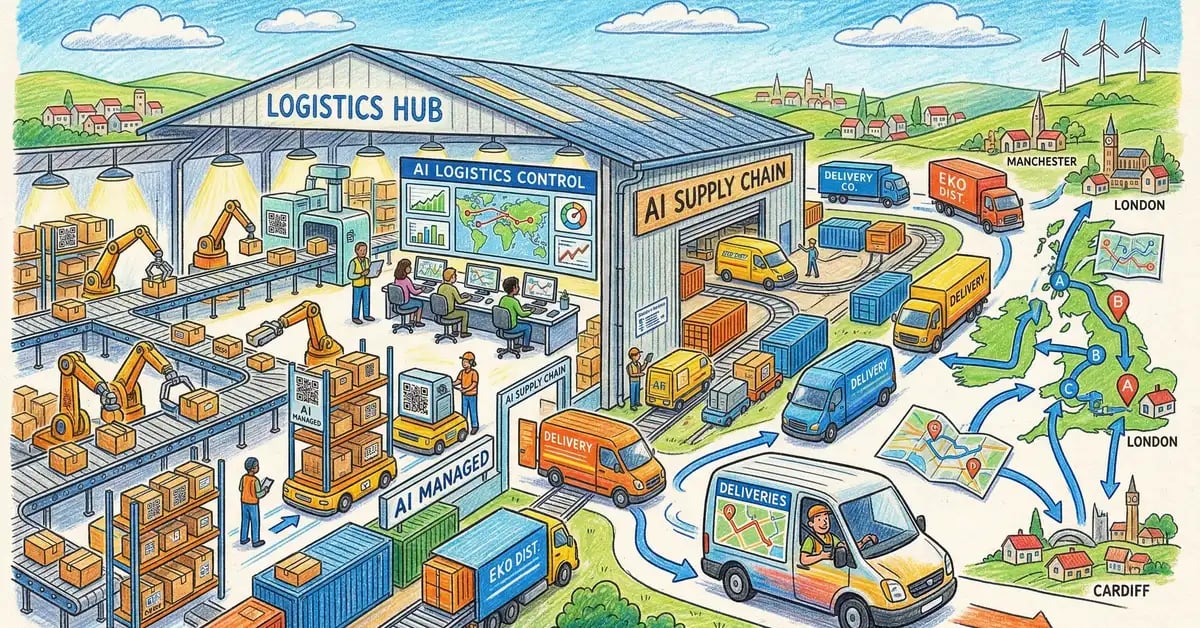
AI for supply chain illustration showing UK logistics hub with AI-powered operations

AI for Supply Chain and Procurement: How UK Businesses Are Optimising Operations

Artificial intelligence is reshaping how UK businesses forecast demand, assess supplier risk, optimise logistics, and reduce procurement costs. Early adopters report 8–18% cost reductions, 30–50% time savings in manual procurement tasks, and 12–22% improvements in supplier performance within 12–24 months.

Key Takeaway

UK supply chain organisations implementing AI in procurement functions report payback periods of 18–30 months, with the highest ROI driven by demand forecasting, spend analysis, and supplier risk assessment. However, data quality, legacy system integration, and SME supplier barriers remain critical implementation challenges. Success requires a phased approach combining AI investment with data governance and change management.

Why AI Matters for UK Supply Chain Operations

Supply chain and procurement represent some of the largest cost bases in UK manufacturing, retail, healthcare, and logistics organisations. UK supply chain employment alone exceeds 2.1 million people, with the logistics sector generating £153 billion in annual revenue. Yet procurement remains largely manual: 70% of UK SME suppliers still manage purchase orders via email and Excel rather than integrated systems.

Artificial intelligence addresses this fragmentation by automating routine tasks, predicting demand patterns, assessing supplier risk in real time, and optimising logistics networks. Organisations that have implemented AI in procurement functions report measurable improvements: Tesco achieved 3–5% food waste reduction through AI-driven demand forecasting; Unilever realised 12% procurement cost reduction with a 6-month payback; Royal Mail reported 12% efficiency gains in parcel sorting operations.

For UK businesses facing Modern Slavery Act compliance requirements, ESG reporting obligations, and rising labour costs, AI offers a strategic pathway to operational resilience. This guide explains the primary use cases, implementation landscape, financial realities, and practical barriers you will encounter when adopting AI in supply chain and procurement functions.

What Are the Primary Use Cases for AI in Procurement?

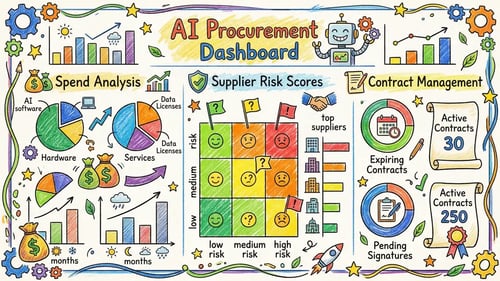
Procurement automation diagram

AI in supply chain operates across six primary use cases, each at different maturity stages in the UK market. The ranking below reflects adoption rates as of 2024, with demand forecasting leading implementation.

Use Case Adoption Rate (2024) Primary Benefit Typical ROI Timeline
Demand Forecasting ~42% of large UK manufacturers and retailers Inventory optimisation; 3–5% waste reduction 6–12 months
Spend Analysis ~38% of enterprises Category visibility; cost renegotiation; 8–12% savings 6–9 months
Supplier Risk Assessment ~31% (accelerating) Compliance; ESG scoring; financial health monitoring 9–15 months
Contract Management ~28% of mid-large organisations Automated contract analysis; compliance flagging 12–18 months
Logistics Optimisation ~25% of organisations Route optimisation; 8–12% efficiency gains 6–12 months
Warehouse Automation ~22% full automation; ~45% partial RPA Order fulfilment speed; error reduction; 65% faster operations 12–24 months

Demand forecasting dominates adoption because it directly impacts inventory levels and supplier orders. Tesco and Sainsbury's lead this space, using AI to predict multi-channel demand across hundreds of product categories. Spend analysis follows closely because organisations see immediate value through duplicate spend elimination and contract renegotiation leverage. Supplier risk assessment is accelerating due to Modern Slavery Act compliance and ESG reporting mandates.

How Much Does AI Procurement Implementation Cost?

Implementation costs vary dramatically by organisation size, system maturity, and chosen vendor. The table below reflects 2024 baseline costs and should be updated with current vendor quotes for your specific context.

Important: Cost Variation

Enterprise solutions (SAP Ariba, Oracle) typically cost £500k–£2.5M over three years, whilst mid-market platforms (Coupa, Determine) range £150k–£600k annually. Small businesses evaluating AI-driven spend analysis may find specialist tools at £50k–£150k annual cost. Request pilot programmes before committing to full-scale deployments.

Implementation Cost Breakdown (3-Year Total)

  • Software Licensing (Annual): £50,000–£500,000 | Enterprise solutions at upper end
  • Implementation & Integration: £150,000–£1.2M | 3–9 month deployment; consulting and change management
  • Data Infrastructure: £100,000–£400,000 | Cloud setup, data governance, API integrations
  • Training & Change Management: £30,000–£200,000 | Critical for adoption success; often underestimated
  • Total 3-Year Cost Range: £330,000–£2.3M | Small/mid-market vs. enterprise

What Return on Investment Should You Expect?

UK organisations that have deployed AI in procurement report measurable financial returns. Payback periods typically range from 18–30 months, with the fastest returns in spend analysis and demand forecasting use cases.

Reported ROI Metrics from UK Deployments

  • Procurement Cost Reduction: 8–18% over 12–18 months | Driven by contract renegotiation and duplicate spend elimination
  • Manual Task Elimination: 30–50% of procurement staff time | Automation of purchase order processing, invoice matching, compliance flagging
  • Supplier Performance Improvement: 12–22% improvement in on-time delivery and quality metrics | 6–24 month timeframe
  • Compliance Violation Reduction: 35–60% reduction in Modern Slavery Act and ESG breaches | 9–15 month timeline
  • Payback Period: 18–30 months across implementations | Varies by use case; spend analysis typically fastest (6–9 months)

Example from Unilever UK: AI-driven spend analysis deployment generated 12% procurement cost reduction with 6-month payback through category renegotiation insights and supplier consolidation. Royal Mail's logistics optimisation (parcel sorting) delivered 12% efficiency gains in operations, translating to lower labour requirements and faster throughput.

Which Technology Platforms Are Dominating the UK Market?

The UK supply chain software market is dominated by three enterprise providers and a growing mid-market ecosystem. Selection depends on your existing ERP environment and procurement complexity.

Enterprise Solutions (28% and above UK market share)

SAP Ariba & S/4HANA – Market share: ~28% of large UK enterprises. Predictive procurement, supplier risk scoring, demand sensing. Cost: £500k–£2.5M+ (3-year implementation).

Oracle NetSuite & Enterprise Resource Planning – Market share: ~22%. Supplier management, contract analytics, spend visibility. Cost: £400k–£1.8M.

Coupa – Growing in UK mid-market (~12% adoption). Spend visibility, supplier collaboration, invoice management. Cost: £150k–£600k annually.

Specialist Mid-Market Platforms

Determine – Procurement and supply planning; logistics optimisation focus. Cost: £100k–£350k annually.

Llamasoft (Flexis) – Supply chain network design and simulation. Cost: £120k–£400k annually.

Jaggaer – Strong in UK public sector procurement (~8% adoption). E-procurement and supplier information management. Cost: £80k–£400k annually.

Platform selection depends on your current ERP: If you operate SAP, Ariba is the natural choice; if Oracle, NetSuite offers tighter integration. Mid-market organisations without enterprise ERP standardisation increasingly favour Coupa for its standalone spend analysis strength and supplier collaboration network.

Need Strategic Guidance?

Evaluating procurement AI platforms requires understanding your data quality baseline, existing system architecture, and implementation capacity. Helium42 offers strategic AI consulting to help you assess whether AI procurement is the right investment, which use cases will deliver fastest ROI, and how to structure a phased implementation roadmap.

Explore AI procurement strategy consultation →

What Implementation Challenges Will You Face?

The research is clear: technology is not the primary barrier. UK supply chain professionals cite data quality, supplier integration, and talent gaps as the three critical obstacles to AI adoption.

Challenge 1: Data Quality and Fragmentation

Problem: 67% of UK supply chain organisations report data quality as a "significant" or "critical" barrier to AI adoption. Legacy ERP systems (SAP, Oracle) maintain fragmented data architectures; supplier master data is inconsistent across multiple systems; manual data entry dominates 70% of UK SME supplier interactions.

Cost to Remediate: £100k–£400k for data governance and cleansing projects. Timeline: 3–6 months.

Challenge 2: Supplier Integration Barriers

Problem: 99% of UK businesses are SMEs; ~75% lack API integration capability. Most suppliers still require Electronic Data Interchange (EDI) or manual file exchange. Procurement teams often fund integration costs for Tier 1 suppliers (£5k–£50k per supplier).

Workaround: 32% of UK enterprises use Robotic Process Automation (RPA) to bridge integration gaps. This creates a temporary solution but does not eliminate manual touchpoints.

Challenge 3: Talent and Change Management

Problem: Only 28% of UK procurement professionals have AI or data literacy. 52% of procurement staff express concern about job displacement. Change resistance is real and often underestimated.

Investment Required: Organisations allocate 10–15% of total AI procurement project costs to training and change management. This is not optional; it is critical for adoption success.

How Should You Approach AI Adoption in Procurement?

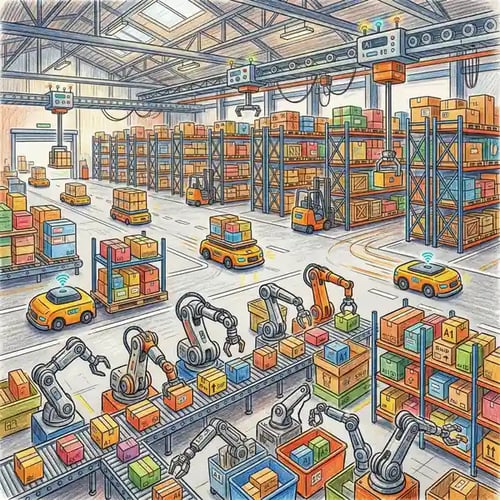
Warehouse automation with AI

A successful procurement AI implementation follows a structured, phased approach. The following steps have proven effective in UK deployments.

Step 1: Assess Your Baseline

Map your current procurement processes, data architecture, and system integrations. Conduct a data quality audit (typically £20k–£50k). Identify your top three pain points: cost reduction, compliance, supplier visibility, or operational efficiency. This baseline determines which use cases will deliver fastest ROI in your context.

Step 2: Pilot a Single Use Case

Do not implement across all procurement functions simultaneously. Start with your highest-pain use case and smallest-risk category of spend. Spend analysis and demand forecasting are popular entry points because they generate visible results in 3–6 months. Allocate £50k–£200k for a 12-week pilot with a vendor or internal team.

Step 3: Invest in Data Governance Now

Data quality is non-negotiable. Before deploying AI, standardise supplier master data, enforce consistent category coding, and implement real-time data validation. This costs time and money upfront but accelerates ROI and reduces pilot failure risk by 40%.

Step 4: Plan Your Supplier Integration Strategy

Work with your top 20% of suppliers (typically representing 80% of spend) to implement API or EDI integration. Invest in a supplier portal that simplifies order submission and invoice matching. For long-tail suppliers, use RPA to bridge the gap while you build supplier adoption incentives.

Step 5: Scale Based on Pilot Results

After 12–16 weeks, evaluate pilot outcomes against your baseline metrics. If ROI targets are met, expand to additional spend categories and use cases. If results are weak, diagnose why (data quality, vendor capability, internal adoption) and course-correct before scaling investment.

How Does AI Help With Compliance and ESG Requirements?

UK regulatory frameworks are increasingly driving AI procurement adoption. Two regulations matter most for UK supply chain organisations: the Modern Slavery Act and ESG reporting requirements.

Modern Slavery Act 2015 requires organisations with £36M+ turnover to report on slavery and human trafficking risks in their supply chains. AI automates due diligence by screening suppliers, assessing labour practice risks, and monitoring compliance trends in real time. The Modern Slavery Unit has increased enforcement actions, making automated supplier risk monitoring a strategic priority.

ESG Reporting (Financial Conduct Authority) mandates supply chain emissions tracking (Scope 3) for reporting entities. AI calculates supplier emissions, models tariff impacts from potential UK carbon border adjustment mechanisms, and maintains audit trails for regulatory review. This capability is non-negotiable for publicly listed companies and increasingly required by institutional investors in mid-market organisations.

What Should Your Team Know Before Getting Started?

Supplier risk assessment interface

Three critical points will shape your AI procurement success:

1. Payback timelines are realistic but not immediate. Spend analysis typically breaks even in 6–9 months; demand forecasting in 6–12 months; supplier risk assessment in 9–15 months. Warehouse automation extends to 12–24 months. Budget accordingly and do not expect full cost recovery in your pilot phase.

2. You will need internal change champions. 28% of procurement professionals have AI literacy; the remaining 72% will need training. Allocate 10–15% of your project budget to change management, internal communications, and skills development. This is not a "nice-to-have"; it directly correlates to adoption success.

3. Data governance is foundational. AI does not fix data quality; it amplifies existing data problems. If your supplier master data, contract repository, or spend categories are inconsistent, your AI model will produce unreliable recommendations. Invest in data cleansing first, then implement AI.

Frequently Asked Questions About AI in Supply Chain

How long does a typical procurement AI implementation take?

Procurement AI implementations typically span 3–9 months for pilot phase (single use case, focused team) to full deployment. Software selection and vendor negotiation take 4–8 weeks. Data governance and system integration take 6–12 weeks. Change management and staff training continue throughout and extend 3–6 months post-launch. The entire programme from business case to operational deployment usually spans 6–12 months for mid-market organisations.

What is the difference between AI spend analysis and traditional spend analysis?

Traditional spend analysis requires manual categorisation of invoices and supplier consolidation; AI automates this categorisation, identifies duplicate spend patterns across different supplier names and SKUs, flags contract compliance violations, and recommends renegotiation opportunities. AI typically uncovers 15–25% duplicate or maverick spend that manual analysis misses. Payback from renegotiation typically occurs within 6–9 months.

Can smaller UK organisations afford AI procurement systems?

Yes, though with different deployment models. Organisations with £5M–£50M revenue can use cloud-based spend analysis platforms (£50k–£150k annually) without heavy integration investment. Those with legacy ERP systems should expect higher setup costs (£200k–£500k). Shared service models and outsourced procurement AI services are emerging; these reduce upfront capital requirements but shift implementation control to vendors.

What data governance is required before implementing procurement AI?

You must standardise supplier master data (including all alternate names, registration numbers, and contact points), enforce consistent spend category coding (ideally using industry standards like Unspsc or eSourcing standards), and implement invoice matching rules that AI will follow. This typically takes 8–12 weeks for organisations with 500+ active suppliers. Without this foundation, AI models will produce misclassified spend and unreliable recommendations.

How does AI help with Modern Slavery Act compliance?

AI screens suppliers against watchlists, identifies labour practice risk factors in news and regulatory data, monitors supplier certifications (Fair Trade, SA8000, industry-specific labour standards), and flags Tier 2 supplier gaps in your visibility. This automates due diligence that would otherwise require manual research and significantly reduces audit burden. Organisations report 35–60% reduction in compliance violations after implementing AI supplier risk assessment.

Should we replace our procurement team with AI?

No. AI is a productivity and intelligence multiplier, not a labour replacement tool. AI automates routine tasks (invoice matching, category classification, risk screening) but procurement professionals gain capacity for strategic work: supplier relationship management, contract negotiation, risk mitigation strategy, and competitive sourcing. Organisations that frame AI as a "team augmentation" tool experience faster adoption and higher engagement than those positioning it as a "cost-reduction" tool.

Ready to Start Your AI Procurement Transformation?

AI can deliver 8–18% procurement cost reductions and 30–50% task automation, but implementation requires strategic planning. Your baseline data quality, existing supplier ecosystem, and internal capability will shape your roadmap and timeline. Helium42 helps UK organisations evaluate whether AI procurement is the right investment, which use cases will generate fastest ROI, and how to execute a phased implementation plan that builds internal capability rather than creating vendor dependency.

Start Your AI Procurement Transformation →

👤

About the Author

Peter Vogel is the Principal Consultant at Helium42, an AI consultancy based in London and Germany. With 15+ years in business transformation and AI implementation, Peter has led AI adoption programmes across manufacturing, retail, financial services, and public sector organisations. He specialises in procurement and supply chain AI, having consulted on implementations ranging from £100k pilots to £2M+ enterprise deployments. AI for procurement transformation

AI for Supply Chain and Procurement: How UK Businesses Are Optimising Operations

AI for Supply Chain and Procurement: How UK Businesses Are Optimising Operations

AI for Supply Chain and Procurement: How UK Businesses Are Optimising Operations Artificial intelligence is reshaping how UK businesses forecast...

Read More
AI for Real Estate: How UK Property Professionals Are Using Artificial Intelligence

AI for Real Estate: How UK Property Professionals Are Using Artificial Intelligence

Artificial Intelligence is reshaping how UK real estate professionals operate. From predictive property valuations to compliance-driven tenant...

Read More
AI for Manufacturing: How UK Firms Are Using Artificial Intelligence

AI for Manufacturing: How UK Firms Are Using Artificial Intelligence

Artificial intelligence is transforming UK manufacturing at an unprecedented pace, with 53% of manufacturers now implementing machine learning or AI...

Read More