
Published by

The Scale of AI Adoption in UK Medical Imaging
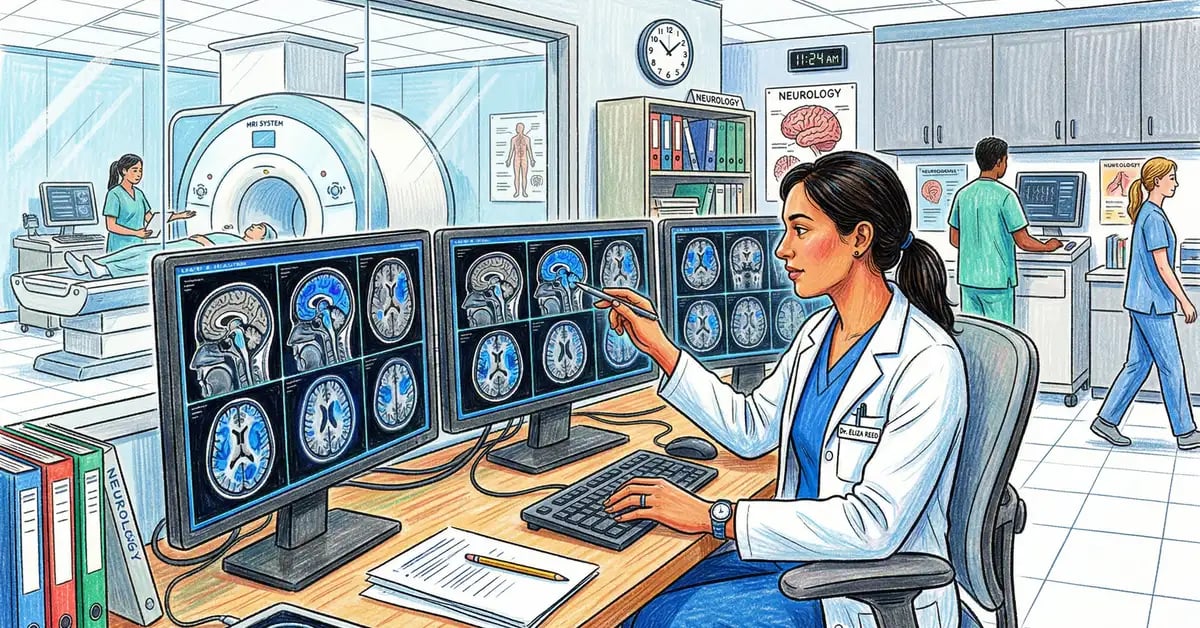
The United Kingdom's medical imaging services have entered a critical transformation phase driven by artificial intelligence. Demand is the driver: the Royal College of Radiologists' 2025 clinical radiology workforce census reports a 32% shortfall of clinical radiology consultants, equivalent to 2,313 whole-time-equivalent radiologists, and forecasts that the gap will reach 40% by 2030 if current trends persist. AI technologies are increasingly recognised as important tools for addressing this capacity crisis. For organisations exploring broader AI applications across healthcare, medical imaging represents one of the most mature and evidence-based deployment areas.
Adoption has grown quickly. The same census found that 75% of UK radiology departments now use AI tools in some capacity, most commonly to support image interpretation (58% of departments), while 26% use AI to prioritise scans for urgent reporting. Pressure is not evenly spread: consultant shortfalls range from 22% in London to 43% in the North East of England, and small acute hospitals report an average shortfall of 43%. This disparity highlights both the promise and the equity challenges inherent in rapid technology deployment.
Clinical Performance: Breast Cancer Screening and Detection
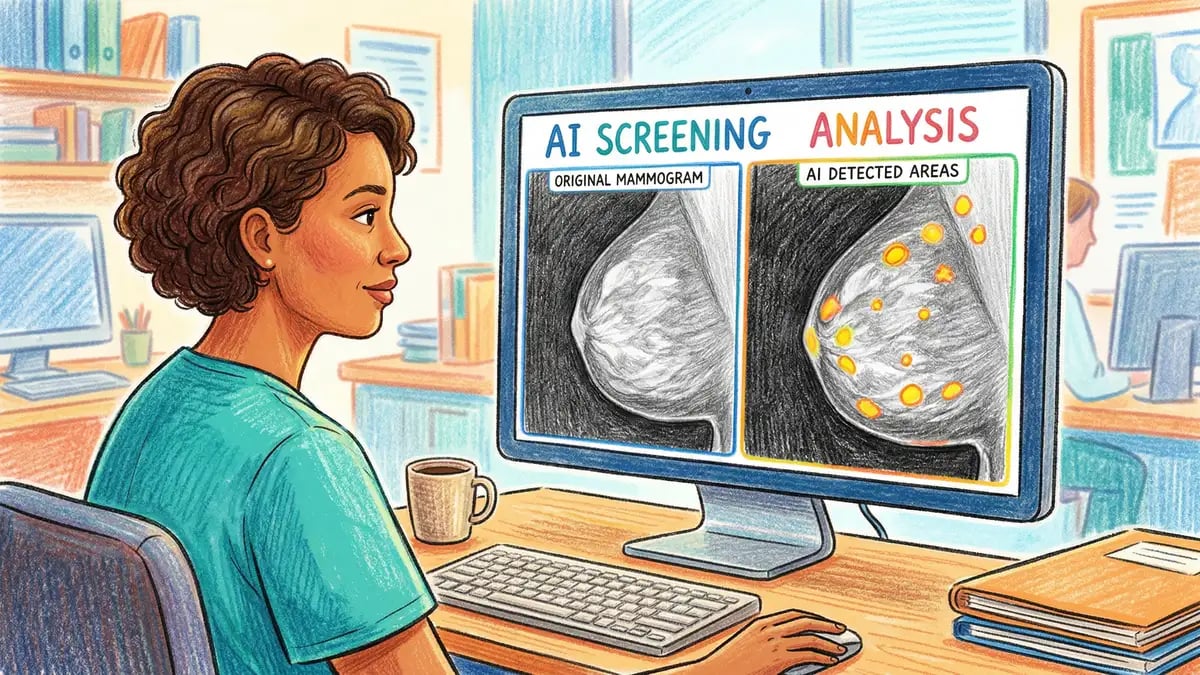
Breast cancer screening is among the most mature applications of AI in medical imaging, with a growing body of prospective evidence on detection rates and reading workload.
The evidence is encouraging. A prospective evaluation of Kheiron Medical Technologies' Mia system, published in Nature Medicine in 2023, used the AI as an additional reader alongside standard double reading at a breast screening provider in Hungary. It found 0.7–1.6 additional cancers detected per 1,000 cases, with 0.16–0.30% additional recalls and 4–6% additional overall reading workload. In the UK, the EDITH trial, announced in February 2025 with £11 million of NIHR funding, is testing AI with nearly 700,000 women at 30 screening sites, to establish whether one specialist supported by AI can safely do the work that currently requires two.
Workflow effects depend on how AI is configured. Used as an additional reader, as in the Mia evaluation, it adds a modest amount of human review in exchange for extra cancers detected; used in place of one of the two human readers, as EDITH is testing, it could release substantial radiologist time. Local validation and clear rules for resolving disagreement between human and AI readers are therefore essential, and the technology is best treated as a "second reader" rather than an autonomous decision-maker, despite ongoing professional concerns about automation.
The workforce implications are substantial. Breast imaging AI is moving from pilot stage towards operational deployment, but national adoption decisions for NHS breast screening will depend on the results of large trials such as EDITH.
Chest X-ray Analysis and Emergency Department Triage
Chest X-ray analysis represents the second major AI application, with deployment particularly concentrated in emergency departments and acute respiratory settings. Commercial tools typically flag findings such as pneumothorax, pulmonary nodules and consolidation. Chest X-ray AI was explicitly included in the £21 million AI Diagnostic Fund announced in June 2023: more than 600,000 chest X-rays are performed each month in England, and the chest X-ray is the most common test used to diagnose lung cancer. Published accuracy varies by product, finding and population, so trusts should rely on independent validation rather than vendor headline figures.
The practical impact in emergency departments comes from prioritisation. AI systems can flag suspected critical findings shortly after image acquisition, so that those images move up the reporting worklist instead of waiting in a manual queue. For fracture detection specifically, NICE's January 2025 early value assessment concluded that four AI technologies (Rayvolve, TechCare Alert, BoneView and RBfracture) can be used in NHS urgent care while further evidence is generated, and that a fifth, qMSK, should be used only in research.
Workflow transformation follows a logical pattern: critical findings are automatically surfaced to radiologists and emergency physicians, and the technology can help to identify abnormalities that manual review might initially miss due to high clinical volume and competing attention demands. The size of any turnaround improvement depends on local workflow and should be measured against a pre-deployment baseline.
These gains directly support the broader clinical imperative: with 10.3 clinical radiologists per 100,000 people in the UK, compared with an OECD average of 12.8 and an EU average of 12.7 according to the RCR's 2025 census, any technology that accelerates diagnosis and reduces manual review time addresses a genuine capacity constraint.
Stroke Detection and Large Vessel Occlusion Identification
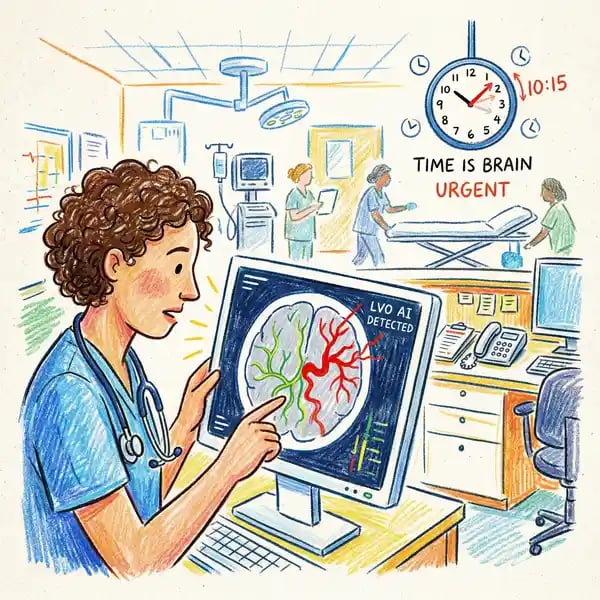
Acute stroke represents one of the most time-critical imaging applications, where delays measured in minutes directly translate to patient outcomes. AI platforms specialising in large vessel occlusion (LVO) detection have achieved strong clinical traction in NHS stroke networks: in June 2023 the government reported that AI stroke decision-support software was in use in 86% of stroke networks and committed to reaching every network by the end of 2023.
The clinical rationale is compelling. These systems analyse CT and CT angiography scans and alert stroke and thrombectomy teams quickly, supporting faster decisions on transfer and treatment. In the same announcement, the Department of Health and Social Care stated that AI had in some cases halved the time for stroke patients to receive the treatment they need, and that faster treatment of this kind has been shown to triple the chance of patients living independently after a stroke.
Stroke AI also illustrates how the regulatory route works in practice. The MHRA does not approve individual devices in the way a medicines regulator approves a drug: software of this kind is placed on the Great Britain market with a UKCA mark or, during the transition period, a valid CE mark, and must be registered with the MHRA. Brainomix's stroke products also hold several US FDA 510(k) clearances.
The financial case for stroke AI rests on outcomes rather than reporting productivity. Consider an illustrative regional network: if faster LVO detection allows more eligible patients to reach thrombectomy in time, the avoided long-term disability and care costs may outweigh licensing costs. The network should model this with its own activity data and the vendor's quoted pricing rather than relying on published averages.
Retinal Imaging and Diabetic Retinopathy Screening
Diabetic retinopathy screening represents a distinctive AI application: the clinical evidence is global, and deployment addresses a specific capacity challenge in UK healthcare. According to Diabetes UK, over 4.7 million people in the UK have a diabetes diagnosis, and almost 6 million are estimated to be living with diabetes; systematic retinopathy screening requires every retinal image to be graded by trained staff, creating bottlenecks in screening capacity.
Automated retinal image analysis systems aim to identify images with no retinopathy, so that human graders can concentrate on images showing possible disease. Reported accuracy varies by product and population, and adoption within national screening programmes depends on independent evaluation, so organisations should check the current position of the relevant UK screening programme before planning deployment.
The intended workflow model is straightforward: retinal images are captured using standard fundus cameras, AI analysis provides rapid risk stratification, and only images flagged as abnormal require human grading and, where necessary, specialist ophthalmology review. If validated, this could substantially reduce grading and specialist clinic burden whilst maintaining diagnostic safety. Healthcare organisations considering similar AI-driven screening models may also benefit from understanding how AI is transforming pharmacy operations and clinical documentation workflows within integrated care pathways.
Leading AI Platforms: Regulatory Status and UK Deployment
The UK medical imaging AI landscape comprises several well-established platforms with varying regulatory status, clinical evidence, and deployment scale. Understanding these options is essential for healthcare leaders evaluating implementation.
Kheiron Medical specialises in breast screening AI through its Mia product, which has the prospective evidence described above. The Nature Medicine evaluation describes Mia as working with standard DICOM images, and buyers should confirm its current UKCA or CE marking and MHRA registration directly. Pricing is available on request.
Lunit provides multi-modality analysis covering mammography, digital breast tomosynthesis and chest X-ray. Its Lunit INSIGHT MMG and Lunit INSIGHT CXR Triage products received US FDA 510(k) clearance in November 2021; buyers should confirm UK marking and MHRA registration for the specific module they intend to use. Pricing is available on request.
Brainomix is widely used in acute stroke imaging, including within the NHS, and its Brainomix 360 stroke products hold multiple US FDA 510(k) clearances. Its software analyses CT and CT angiography to support detection of large vessel occlusion and assessment of early ischaemic change. Pricing is available on request, and buyers should confirm UK marking and MHRA registration for each module.
Viz.ai provides care-coordination software for urgent and emergency imaging, including stroke alerts, and states that its platform includes more than 50 FDA-cleared AI algorithms. Alerts are routed directly to specialist teams. Pricing is available on request, and UK buyers should confirm the regulatory status of each algorithm for the Great Britain market.
Regulatory change remains a planning consideration. The MHRA's Software and AI as a Medical Device Change Programme, set out in a roadmap published in October 2022, is still developing AI-specific guidance, including on predetermined change control plans for models that are updated after deployment. Classification of specific devices and pathway timelines therefore remain subject to case-by-case interpretation.
Implementation Costs and Financial Return on Investment
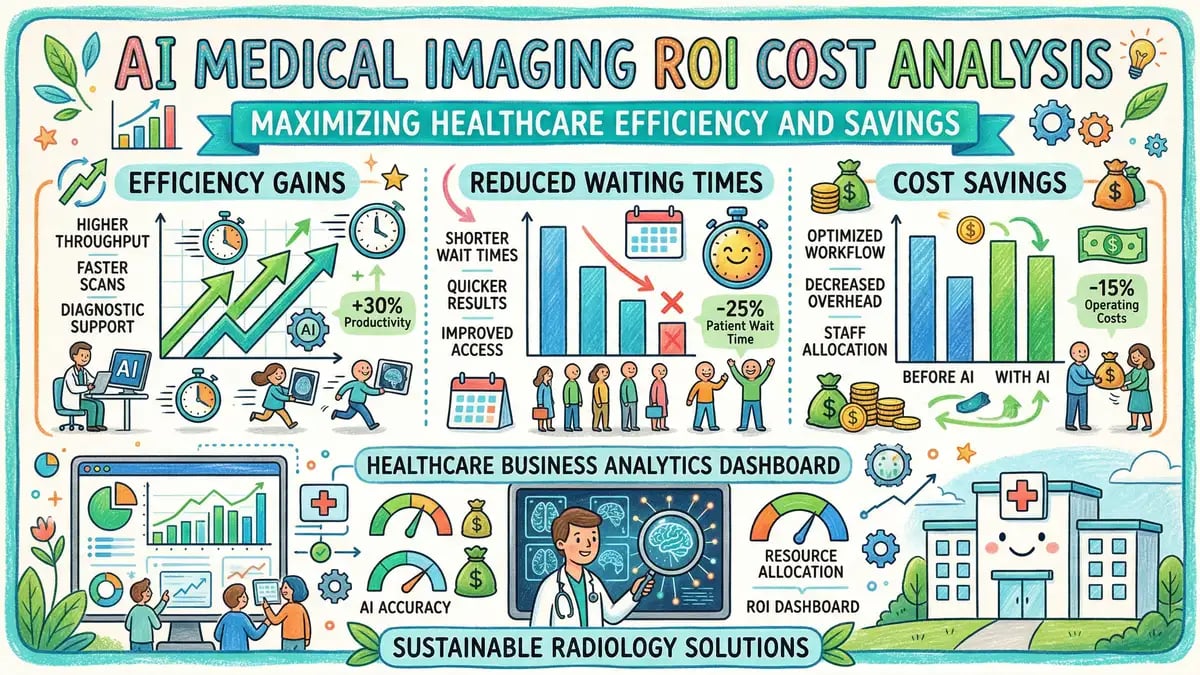
Healthcare organisations evaluating AI implementation must understand the full cost of deployment and realistic financial returns. Costs vary significantly by trust size, existing infrastructure and vendor, and published NHS cost data remain limited, so business cases usually rest on local modelling.
Consider an illustrative example. A large trust deploying breast screening AI would typically need to budget for software licensing, PACS integration (which can be complicated by legacy HL7 compatibility issues), staff training and validation, and allocated staff time during implementation. Potential benefits include reduced reading time, fewer consensus or arbitration reads and additional cancers detected; each should be baselined before go-live so that the actual effect can be measured rather than assumed.
Critical to financial evaluation is understanding that break-even timelines vary considerably by application. High-volume, standardised tasks with strong clinical evidence, such as breast screening, are generally the easiest to justify. Workforce-constrained organisations using AI for priority-driven triage may build the strongest case when benefits are quantified against outsourcing, insourcing and locum costs, which the RCR puts at £362 million across the UK in 2025. More complex or lower-volume applications may take longer to justify through productivity and quality gains alone.
A second illustrative example: a district general hospital deploying chest X-ray AI would weigh annual licensing and setup costs against radiologist and emergency department time saved. Clinical outcome improvements, such as faster identification of critical cases resulting in earlier treatment, are clinically meaningful but often difficult to quantify financially, which tends to lengthen the projected break-even period.
The financial equation changes markedly in workforce-constrained settings. Where a department relies heavily on locum, insourced or outsourced reporting, AI-supported triage that improves throughput can reduce that reliance, and easing workload pressure may help with retention. In that context the case for investment is stronger, because the technology addresses a critical workforce problem as well as a productivity one.
Regulatory Challenges and MHRA Pathways
The Medicines and Healthcare products Regulatory Agency (MHRA) is reforming the regulation of software and AI as a medical device, and parts of the new framework are already in force. Understanding the current landscape is essential for organisations planning AI deployment.
As detailed in UK medical device regulatory guidance, Great Britain regulates devices under the UK Medical Devices Regulations (UK MDR), and manufacturers can use the UKCA mark to show conformity. CE-marked devices can continue to be placed on the Great Britain market until 30 June 2028 or 30 June 2030, depending on the EU legislation they comply with, and the government has announced that it will consult on indefinite recognition of CE-marked devices. Strengthened post-market surveillance requirements came into force on 16 June 2025. The EU In Vitro Diagnostic Regulation (IVDR) applies in the EU and Northern Ireland, not in Great Britain, and imaging AI is generally regulated as medical device software rather than as an in vitro diagnostic.
For artificial intelligence and software as a medical device (SaMD) specifically, the MHRA's work programme covers several themes that matter to imaging buyers. Manufacturers need to show how algorithm changes are controlled, and the MHRA, the US FDA and Health Canada have jointly published guiding principles on good machine learning practice, predetermined change control plans and transparency. Clinical evidence should demonstrate performance on populations representative of UK patients, including subgroups by age, ethnicity and sex, and manufacturers must monitor real-world performance as part of post-market surveillance.
Some elements of the new framework, including specific guidance on predetermined change control plans, are still being finalised. Healthcare leaders should check the current MHRA position before procurement and anticipate continued evolution.
The number of UK approved bodies able to assess novel AI imaging devices is limited, which can lengthen conformity assessment timelines, particularly for novel algorithms without regulatory precedent.
NHS Workforce Context and Radiologist Shortages
The driving force behind AI adoption in UK medical imaging is fundamentally a workforce crisis. The Royal College of Radiologists' 2023 census counted 4,624 whole-time-equivalent clinical radiologists (consultants and specialty and specialist doctors) in the UK, with 507 whole-time-equivalent consultant vacancies, a 10% vacancy rate. By its 2025 census, the consultant shortfall had grown to 32%.
The shortage is measurable and growing. The UK has 10.3 clinical radiologists per 100,000 population, below both the OECD average of 12.8 and the EU average of 12.7. The RCR estimates that the UK needs an additional 2,313 whole-time-equivalent clinical radiologists, forecasts that the shortfall will rise to 40% by 2030 if current trends persist, and reports that demand for complex imaging is growing twice as fast as the clinical radiology workforce.
The geographic concentration of shortages exacerbates equity challenges. Consultant shortfalls range from 22% in London to 43% in the North East of England, creating regional diagnostic capacity disparities. Locums made up 10% of the consultant workforce in the RCR's 2023 census, and the cost of managing excess demand through outsourcing, insourcing and ad hoc locums reached £362 million in 2025.
The Royal College of Radiologists recommends that radiology AI should be radiologist-led and should follow clear evidence of benefit to patients and the system. Its 2025 census found little evidence so far that AI is meaningfully reducing radiology workloads: among departments using them, 23% reported that AI image prioritisation tools had reduced workload. AI deployment without recruitment therefore represents a short-term efficiency measure rather than a sustainable solution to workforce challenges.
Training implications are substantial. In the RCR's 2023 census, 64% of trust and health board leaders said that a lack of staff capacity or expertise to train was a significant barrier to adopting and implementing AI. Radiologists need competence in tool operation, interpretation of AI outputs and understanding of AI limitations, and protected time in which to acquire it.
PACS Integration: Technical Standards and Operational Challenges
One of the largest technical barriers to AI implementation in NHS trusts is PACS (Picture Archiving and Communication System) integration. The NHS PACS landscape is heterogeneous, with several major vendors and legacy systems in use across trusts.
Technical integration requires compatibility across Digital Imaging and Communications in Medicine (DICOM) standards—which is nearly universal in NHS PACS—but also Health Level 7 (HL7) messaging for clinical workflow integration. Many NHS trusts operate legacy HL7 v2 messaging, while newer platforms increasingly support FHIR (Fast Healthcare Interoperability Resources). Custom interface mapping is frequently required, adding time and scope-dependent integration cost to each implementation.
This integration complexity is a common cause of implementation delays. Legacy messaging incompatibilities, and mixed PACS environments across a multi-site network, can each add weeks or months of vendor coordination, and these timelines and costs are seldom budgeted adequately in initial implementation planning.
The evolving standards landscape offers hope for future deployments. FHIR adoption is expanding within the NHS, as reflected in NHS England's digital services, and as legacy PACS retire, modern standards adoption should ease integration complexity. Healthcare organisations should prioritise FHIR compatibility in future PACS procurement decisions to enable smoother AI platform integration.
Organisational Change Management and Radiologist Adoption
Technical implementation represents only part of successful AI deployment; organisational change management often determines whether clinical benefits are realised. Radiologist engagement, workflow redesign, and iterative platform tuning account for a significant share of total implementation cost and timeline.
Resistance to AI adoption follows predictable patterns: initial concern about diagnostic accuracy (typically resolved through demonstrated clinical validation), apprehension about job security (addressed by communicating workforce shortage context and explaining AI as workload augmentation), and practical workflow friction (resolved through iterative protocol refinement). In well-managed implementations, radiologist confidence can grow as physicians recognise AI utility for high-volume screening and triage tasks.
Change management good practice includes: (1) early radiologist engagement in vendor selection and protocol design; (2) dedicated change management leadership (not delegated to IT); (3) iterative workflow optimisation after launch; (4) transparent communication about job security and career implications; (5) protected training time, since the time needed for competency is easily underestimated; (6) alert threshold tuning to prevent alert fatigue, with active monitoring in the first weeks after launch.
Organisations underestimating change management investment frequently experience delayed benefit realisation or incomplete adoption. When change management is prioritised—allocated adequate budget, staffing, and timeline—clinical and financial benefits are more likely to be realised as planned.
Healthcare Equity and Implementation in Under-resourced Settings
AI deployment in UK medical imaging raises important equity considerations. Initial adoption is concentrated in large metropolitan trusts and well-resourced private diagnostic centres—exactly the organisations least constrained by capacity shortages. Smaller district general hospitals and under-resourced NHS trusts face higher proportional costs (as percentage of radiology budget) and greater integration complexity, potentially widening diagnostic capacity gaps.
Several approaches have shown promise for extending AI access to resource-constrained settings. Cloud-based AI platforms can reduce on-site infrastructure investment, though network bandwidth requirements may challenge trusts with legacy IT infrastructure. Regional procurement through imaging networks, where multiple trusts share a single deployment, can reduce per-site cost. Central funding has also helped: the £21 million AI Diagnostic Fund described above allowed NHS trusts to bid for money to deploy AI imaging and decision-support tools.
Despite these initiatives, geographic and organisational variation in access will likely persist through 2026 without targeted equity investment. Healthcare leaders should consider equity implications when designing implementation strategies.
Integration with Clinical Workflows and Diagnostic Accuracy
Successful AI implementation requires thoughtful integration into existing diagnostic workflows rather than treating AI as a standalone tool. The most effective deployment models embed AI-generated insights into radiologist decision-making rather than asking radiologists to work around AI systems.
Practical integration takes several forms. In breast screening, AI detection sensitivity is presented alongside traditional visual reading—radiologists may read the mammogram independently, then compare their findings against AI flags to identify potential misses. In stroke imaging, AI-generated LVO alerts are routed directly to thrombectomy teams, enabling rapid decision-making whilst preserving radiologist final authority. In chest X-ray triage, AI severity assessment prioritises critical cases to radiologist worklists, allowing manual triage to focus on genuinely ambiguous cases.
The evidence consistently demonstrates that AI performs best when augmenting rather than replacing radiologist decision-making. Radiologists are not made obsolete by AI; instead, their role evolves to focus on complex cases, multidisciplinary team participation, and quality assurance. This represents genuine augmentation: AI handles standardised, high-volume tasks; radiologists provide contextual judgment, integrate clinical history, and maintain medicolegal responsibility.
Quality assurance becomes critical. Organisations should implement monitoring to track AI performance in production, with triggers for performance review at defined thresholds. Regular review of missed diagnoses, false positive alerts, and overall system accuracy, for example quarterly, is good practice, and feeds the post-market surveillance that manufacturers are required to carry out.
Frequently Asked Questions
Will artificial intelligence replace radiologists?
The evidence strongly suggests artificial intelligence will augment rather than replace radiologists. The Royal College of Radiologists estimates that the UK is 2,313 whole-time-equivalent clinical radiologists short, and AI can help to address this capacity gap by supporting high-volume, standardised tasks such as screening and triage. Radiologists retain authority for complex cases, multidisciplinary team participation, and diagnostic decisions. AI enables radiologists to focus on higher-value work rather than routine image review.
What is the cost of implementing AI in medical imaging?
Implementation costs vary by trust size, application and vendor, and most vendors provide licence pricing on request. Alongside licensing, organisations should budget for initial setup and integration that can run from about £8,000 to £250,000 or more, depending on scope, plus staff training and time. Break-even timelines depend on application and workload volume, so each business case should be modelled on local data.
How long does it take to implement AI in medical imaging?
Implementation typically takes several months from vendor selection to full deployment. PACS integration represents the largest variable, depending on legacy system complexity. Staff training and protocol validation add further time, and organisations should allow a period of iterative workflow optimisation after launch before measuring clinical benefits.
What regulatory approval is required for AI medical devices in the UK?
AI medical devices placed on the Great Britain market need a UKCA mark or, during the transition period, a valid CE mark (accepted until 30 June 2028 or 30 June 2030, depending on the EU legislation the device complies with), and must be registered with the MHRA. The MHRA's Software and AI as a Medical Device Change Programme is still developing AI-specific guidance, so buyers should check the current position before procurement.
What training do radiologists need to work effectively with AI?
Radiologists need foundational training covering AI tool operation, interpretation of AI outputs and confidence scores, and understanding of system limitations. Organisations should allocate protected training time (not compressed into clinical shifts) and plan for a period of iterative learning within the production environment, supported by ongoing continuing professional development.
Transforming Medical Imaging: Strategic Imperatives for Healthcare Leaders
Artificial intelligence is fundamentally transforming UK medical imaging from a workforce-constrained, bottlenecked speciality into a capability-multiplied discipline. The clinical evidence is growing: prospective breast screening evaluations have found additional cancers detected with few unnecessary recalls, AI stroke software is in use across NHS stroke networks, and emergency department triage tools help to prioritise critical findings. Three quarters of UK radiology departments now use AI in some capacity.
However, successful implementation requires far more than purchasing technology. Healthcare organisations must navigate complex PACS integration challenges, manage organisational change systematically, invest in comprehensive radiologist training, and understand the evolving regulatory landscape. Break-even timelines that can extend over several years demand realistic financial planning and patient stakeholder engagement. Workforce planning must integrate AI deployment alongside—not instead of—radiologist recruitment.
The organisations achieving the strongest results share common characteristics: early radiologist engagement in vendor selection, dedicated change management leadership, iterative workflow optimisation post-launch, and transparent communication about AI's role as augmentation rather than automation.
For healthcare organisations exploring AI adoption, the imperative is clear: the technology is commercially available, increasingly evidence-based, and already in use across many NHS settings. The question is no longer whether to implement AI in medical imaging, but how to implement it sustainably whilst maintaining diagnostic quality, supporting workforce wellbeing, and ensuring equitable access across the NHS.
Related reading: Explore AI acceleration in drug discovery, AI applications in mental health assessment, regulatory compliance frameworks for AI in healthcare, and AI integration in dental imaging diagnostics for broader context on healthcare AI deployment.
Ready to Transform Medical Imaging with AI?
Helium42 helps healthcare organisations build internal AI capability through education-led implementation. From radiology departments to diagnostic services, our programme is designed to reach production in 6–8 weeks. Peter Vogel has led digital marketing transformation programmes for over 500 organisations, and our founders have together delivered more than 200 workshops and trained over 2,000 professionals; we bring that education-led experience to healthcare AI implementation.
Book a Consultation