

Published by

The Critical Moment for Pharmacy and Artificial Intelligence
The United Kingdom's pharmacy sector stands at a decisive inflection point. Community pharmacies and hospital pharmacy departments face unprecedented pressure: persistent workforce shortages, with pharmacist vacancies reported across many regions. Patient safety remains paramount, yet dispensing errors continue to pose risks, and administrative burden consumes hours each day that could be redirected toward clinical patient care. Meanwhile, inventory management across tens of thousands of medicines creates operational inefficiency, waste, and cost exposure.
Artificial intelligence offers a practical pathway through these challenges. AI is already used in pharmacy for tasks such as clinical checks in dispensing systems, supporting operational tasks and transcribing patient notes, as the General Pharmaceutical Council recognises in its April 2026 position statement on AI in pharmacy. Its main promise lies in three areas: catching dispensing errors earlier, reducing medicines waste through better forecasting, and returning administrative time to clinical consultation and patient engagement. The scale of benefit depends on the setting, the baseline and the quality of implementation, so organisations should measure it locally rather than rely on headline figures.
This article explores how artificial intelligence is reshaping pharmacy operations, the evidence base supporting deployment, the regulatory and governance framework that ensures patient safety, and the practical implementation pathway, including how to measure return on investment.
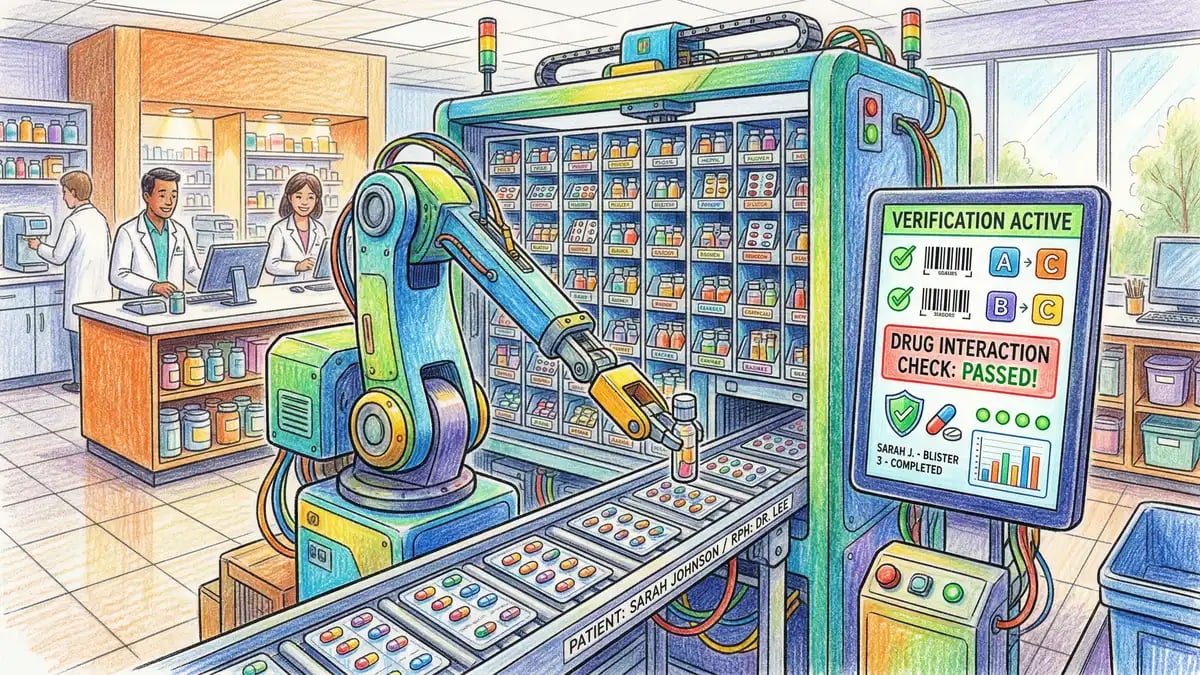
Dispensing Verification: The Foundation of Pharmacy AI
Medication dispensing is one of the highest-risk processes in healthcare. A single error—incorrect patient identification, wrong strength, or incorrect quantity—can result in serious adverse events, hospital admission, or patient harm. Traditional verification relies entirely on pharmacist judgment and manual checking, creating a bottleneck where human fatigue, interruptions, and volume pressure contribute to error.
AI-assisted dispensing verification systems analyse pharmacy data in real time, cross-referencing prescriptions against patient records, allergy histories, current medications, and evidence-based interaction databases. These systems flag potential errors before dispensing occurs, allowing the pharmacist to review and correct issues.
The published evidence base for AI-assisted dispensing verification is still developing, and reported error reductions vary by system, setting and baseline. Pharmacies should ask vendors for independent evaluation data relevant to UK practice and measure their own error rates before and after deployment.
Notably, these systems do not replace the pharmacist. Instead, they enhance human judgment. The pharmacist remains accountable for every dispensing decision. AI serves as a safety net, highlighting patterns that human review might miss during high-volume periods or in complex cases with multiple contraindications. Before adopting any system, pharmacies should check how it has been evaluated in comparable UK settings.
The General Pharmaceutical Council (GPhC), in its position statement on the use of AI in pharmacy published in April 2026, emphasised that pharmacy professionals remain personally accountable for their decisions and that AI should not replace clinical decision-making and professional judgement. This principle ensures that technology amplifies professional judgment rather than automating decision-making away from qualified practitioners.
Inventory Optimisation and Pharmaceutical Waste Reduction
Pharmacy inventory management is extraordinarily complex. A community pharmacy stocks thousands of product lines, and hospital pharmacy departments manage larger ranges again across multiple wards, theatres, and specialist services. Forecasting demand, managing expiry dates, minimising waste, and ensuring stock availability requires constant adjustment.
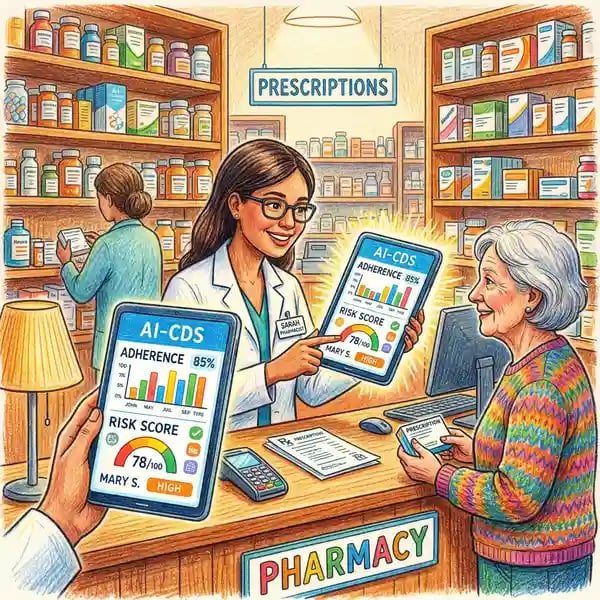
Traditional inventory management relies on manual ordering based on historical usage patterns, supplier lead times, and seasonal variation. Overstocking ties up capital and increases expiry waste. Understocking creates stock-outs that disrupt patient care and force emergency ordering at premium rates. The result is avoidable waste when medicines expire or become obsolete without patient use.
AI-driven inventory systems apply machine learning to historical dispensing data, seasonal patterns, population health trends, and external factors such as disease prevalence or medication guideline changes. These systems aim to predict demand at the product level more accurately than manual forecasting, optimising order timing and quantities. Retail analytics, demand sensing, and predictive supply chain techniques—proven in other sectors—now translate directly to pharmacy.
Independent, published evidence on AI inventory systems in UK pharmacy remains limited, so organisations should treat vendor-reported waste reductions with caution and establish their own baseline before deployment. For a hospital pharmacy with a large annual medicines spend, even a modest reduction in expiry waste can be material, and community pharmacy networks can benefit from faster stock turnover and improved cash flow.
Beyond financial impact, these systems improve patient safety. Better availability of prescribed medicines reduces treatment delays. Automated alerts for approaching expiry dates ensure clinical teams have confidence in medicine shelf life. Supply chain transparency provides audit trails that support regulatory compliance.
Administrative Automation and Pharmacist Redeployment
The United Kingdom's pharmacy workforce is in crisis. Vacancies persist across registered pharmacist, pharmacy technician, and support staff roles. At the same time, patient demand for clinical pharmacy services—medicines optimisation, therapy review, immunisation services, and minor ailment management—continues to grow. Pharmacies lack the capacity to meet this demand because administrative and processing tasks consume a large share of available staff time.
AI-powered administrative automation addresses this constraint directly. Document processing systems extract data from prescriptions, referral letters, and clinical notes, populating patient records automatically. Natural language processing converts unstructured clinical text into structured data, eliminating manual data entry. Automated triage systems prioritise prescriptions and queries, routing complex cases to pharmacists and routine processing to automated systems.
The NHS Electronic Prescription Service (EPS2) handled 1.16 billion of the 1.19 billion prescription items dispensed by community pharmacies in England in 2025/26, or 97 per cent, according to NHS Business Services Authority statistics. AI triage tools that work alongside electronic prescriptions aim to reduce manual processing overhead, freeing administrative and technical staff from routine data handling to focus on patient-facing activities.
For individual pharmacists, the potential time savings are meaningful: automation can reduce the time spent on administrative tasks such as checking supplier communications, processing reimbursement queries, managing patient alerts, and documentation. Redirecting these hours toward clinical consultation, quality assurance, or preventative services such as blood pressure monitoring or smoking cessation support increases both patient safety and practice revenue.
The workforce benefit is profound. By automating routine administrative burden, AI creates space for pharmacists to deploy their clinical expertise and professional judgment—the reason they trained for five years or more. This improves job satisfaction, reduces burnout, and makes pharmacy careers more attractive to students and trainees.
Medication Interaction and Contraindication Detection
Polypharmacy—the use of multiple medicines simultaneously—is increasingly common, particularly in older patients and those with chronic diseases. Older patients frequently take several medicines every day. Identifying clinically significant interactions, contraindications, and dose adjustments manually is cognitively demanding and error-prone. Pharmacists must rapidly cross-reference multiple medicines against evidence-based interaction databases, consider patient factors such as renal or hepatic impairment, and make judgment calls about clinical significance.
AI systems trained on interaction databases, clinical literature, and real-world prescribing patterns aim to identify interaction signals accurately. These systems can flag not only well-known interactions (such as warfarin with aspirin) but also subtle interactions that might be overlooked during manual review. They prioritise alerts by clinical severity, reducing alert fatigue by filtering out low-risk interactions and highlighting high-impact issues.
Notably, AI for healthcare systems can integrate patient-specific factors—age, renal function, hepatic status, pregnancy, breastfeeding—to contextualise recommendations. A dose that is safe for a 40-year-old with normal function may be unsafe for an 85-year-old with moderate renal impairment. AI systems adjust recommendations dynamically, supporting pharmacist decision-making in complex cases.
AI-assisted interaction checking can surface clinically significant interactions that traditional single-interaction lookups miss, but independent UK evaluation data remain limited, so organisations should validate performance locally before relying on it.
Regulatory Framework and Professional Accountability
Deployment of artificial intelligence in pharmacy must navigate a complex regulatory and professional landscape. In the United Kingdom, pharmacies operate under the authority of the General Pharmaceutical Council (GPhC), and pharmacists are accountable for patient safety, professionalism, and adherence to evidence-based practice.
The GPhC published a position statement on the use of AI in pharmacy in April 2026, setting out how its existing standards apply when AI is used. This guidance emphasises pharmacist accountability: AI systems do not assume responsibility; they augment pharmacist judgment. Transparency is mandatory: patients and healthcare colleagues must understand when AI is involved in decision-making. Competence is non-negotiable: pharmacists using AI systems must understand how these systems work, their limitations, and potential failure modes. Audit and governance must be embedded: organisations must monitor AI system performance, track outcomes, and identify adverse events. Data protection and patient confidentiality must be safeguarded, complying with UK GDPR and NHS data governance standards.
The Medicines and Healthcare Products Regulatory Agency (MHRA) regulates many AI products designed for use in healthcare as medical devices, under its software and AI as a medical device guidance; whether a pharmacy tool qualifies depends on its intended purpose. The GPhC has stated that it does not regulate AI tools or assess their clinical safety or technical performance, so pharmacies should confirm a product's regulatory status with the vendor as well as meeting GPhC standards.
Professional bodies such as the Royal Pharmaceutical Society (RPS) and Community Pharmacy England (formerly the Pharmaceutical Services Negotiating Committee) also shape professional practice and the contractual framework for community pharmacy. Whatever the source of guidance, pharmacists retain ultimate decision-making authority.
This accountability model creates a crucial distinction: pharmacy AI is not autonomous. It is decision-support technology, analogous to clinical guidelines or laboratory results. The pharmacist interprets information, applies professional judgment, and assumes responsibility for the outcome. This maintains patient safety and professional integrity.
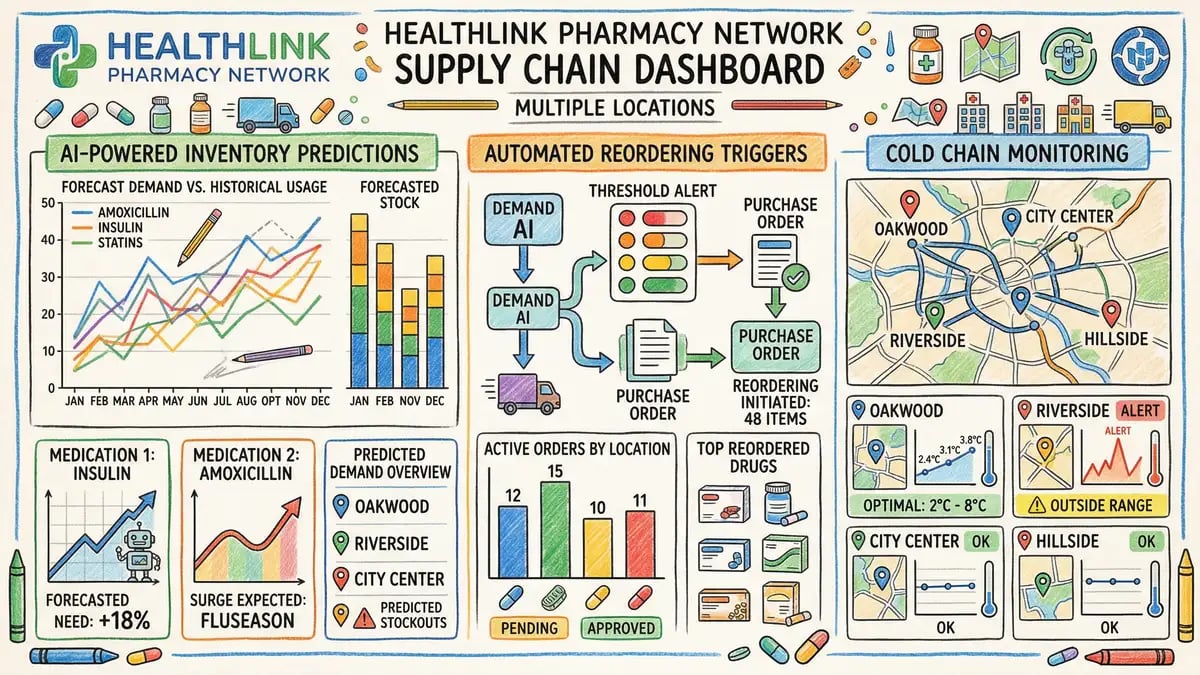
Community Pharmacy Implementation and Financial Outcomes
Community pharmacies—the retail pharmacies on high streets across the UK—operate at significant scale. In England alone, 10,388 community pharmacies were open at 31 March 2026, and they dispensed 1.19 billion prescription items in 2025/26, according to NHSBSA. They also provide NHS Pharmacy First consultations and other minor ailment services, deliver immunisations, and provide specialist services such as smoking cessation support and substance misuse intervention.
For community pharmacies, AI implementation typically focuses on dispensing verification, inventory optimisation, and administrative automation. When building a business case, a community pharmacy network should measure benefits and costs in the following areas:
- Dispensing accuracy: any reduction in errors against a measured baseline, improving patient safety and reducing incident investigations
- Inventory efficiency: waste reduction, freeing working capital for other investments
- Administrative time savings: reduced back-office staff time, allowing redeployment to patient-facing services
- Pharmacist time availability: hours freed for clinical services such as therapy review and minor ailment consultations
- Revenue impact: Increased clinical service throughput; additional minor ailment consultations and medicines optimisation reviews directly contribute to revenue under NHS-agreed service specifications
- Net annual benefit per network: measured savings set against subscription, integration and training costs
- Payback period: the point at which cumulative benefits exceed total costs, modelled for each organisation
Implementation typically requires a change management period, staff training, and integration with existing practice management systems. Organisations must select vendors whose systems integrate with industry-standard pharmacy software and support compliance with GPhC standards.
For independent community pharmacies—often single-site or small chains—implementation barriers can be lower than perceived. Subscription-based models allow pharmacies to access AI capabilities without large capital outlays; subscription pricing is set by each vendor and is often available on request. Bespoke production AI work in the UK ranges from about £8,000 to £250,000+ by scope, according to our UK AI Consultancy Price Index. Working capital or lease finance options can help spread the cost.
Hospital Pharmacy Deployment and Efficiency Gains
Hospital pharmacy departments manage significantly higher complexity than community pharmacies. A large teaching hospital may process thousands of prescription items daily across dozens of wards, operating theatres, outpatient services, and specialist units. Medicines supply chains are international and multi-tiered. Inventory includes rare and expensive medicines used in specialised services. Stock-outs directly disrupt patient care and operating theatre schedules.
For hospital pharmacy, AI deployment emphasises inventory optimisation, demand forecasting, and supply chain coordination. AI systems predict ward-level medicines demand, optimise purchasing patterns, reduce stock-holding costs, and identify purchasing consolidation opportunities across multiple suppliers.
A hospital pharmacy business case should quantify the following:
- Annual savings: measured against a documented baseline, recognising that results depend on hospital size and baseline performance
- Implementation investment: software, integration and training costs; bespoke production AI work in the UK ranges from about £8,000 to £250,000+ by scope
- Payback period: modelled locally rather than assumed
- Ongoing ROI: tracked annually after go-live against the original business case
Beyond financial metrics, hospital pharmacy AI improves patient safety. Reduced stock-outs ensure continuous availability of critical medicines. Better demand sensing prevents overstocking of high-cost oncology or critical care medicines that may expire before use. Automated stock movements between wards reduce manual handling errors and accelerate availability during emergencies.
Teaching hospitals considering these systems should ask vendors for documented case studies from comparable NHS trusts that can inform best practice.
Integration with Clinical Decision Support and Electronic Health Records
The most mature pharmacy AI implementations integrate multiple systems into comprehensive clinical decision support environments. Dispensing verification connects to patient electronic health records (EHRs), interaction checking links to medication history, inventory systems integrate with procurement and supplier systems, and administrative automation connects to billing and reimbursement.
This integration creates a closed-loop system where AI recommendations at each stage—selection, verification, dispensing, administration, monitoring—inform subsequent decisions. A patient prescribed a new medicine is checked against contraindications, allergies, and interactions. The dispensing system flags potential issues. The inventory system ensures stock is available. The administration system tracks what was dispensed and when. Clinical outcome data feeds back into the system, improving future recommendations.
Integration also enables AI for healthcare compliance, supporting adherence to regulatory standards. Audit trails automatically document that each dispensing decision was reviewed by a pharmacist and that AI recommendations were considered. Governance dashboards track AI system performance, identify potential biases, and escalate failures to pharmacy management.
Organisations implementing integrated pharmacy AI must ensure interoperability with existing systems. Integration with major pharmacy software vendors—such as those used in NHS trusts—is essential. Data governance must be robust: patient data flows between systems must be encrypted and audited. Staff training must cover not only how to use AI systems but how to interpret recommendations critically and recognise when algorithms may fail.
Addressing Workforce Pressures Through Technology and Training
The pharmacy workforce crisis cannot be solved by technology alone. The United Kingdom needs to recruit, train, and retain more pharmacists and pharmacy technicians. However, AI can alleviate immediate pressures and make pharmacy careers more attractive.
By automating routine administrative tasks, AI creates time for experienced pharmacists to provide mentoring and training to junior staff and trainees. This improves professional development and retention. By reducing medication errors and improving patient safety, AI supports pharmacists in delivering excellent care, improving job satisfaction. By freeing time for clinical work, AI allows pharmacists to expand their scope of practice, take on more complex cases, and develop specialisations such as therapeutic drug monitoring or medicines optimisation.
Organisation implementing AI should couple technology deployment with professional development. AI training programmes that help pharmacists and technicians understand AI systems, interpret recommendations, and apply them judiciously are essential. Staff who receive comprehensive training adopt AI systems faster, achieve greater efficiency gains, and maintain strong patient safety outcomes.
Helium42's founders have delivered more than 200 workshops and trained over 2,000 professionals in digital marketing transformation. Organisations that combine technology deployment with education-led training achieve superior outcomes: faster implementation, higher user adoption, and sustained efficiency gains over time.
Drug Discovery and Pharmaceutical Research Applications
Beyond operations and patient care, AI is transforming pharmaceutical research and drug discovery. AI for drug discovery accelerates identification of promising compounds, predicts efficacy and safety profiles, and optimises formulations. For pharmacy students, researchers, and pharmacy academics, understanding AI applications in drug development is increasingly important.
AI systems analyse vast chemical databases, predict molecular interactions, and identify compounds most likely to bind to disease targets. This accelerates lead identification, reducing time and cost in the discovery pipeline. For complex conditions such as neurodegeneration or autoimmunity, where thousands of potential compounds exist, AI narrows the field to the most promising candidates for experimental validation.
The implications for community and hospital pharmacy are indirect but significant: faster drug development pathways mean new medicines reach patients sooner. Pharmacists must understand how these medicines were discovered and developed, how their efficacy was validated, and what safety monitoring is appropriate. Knowledge of AI in drug discovery contributes to this understanding. Similarly, AI applications in dental practice demonstrate how diagnostic AI improves outcomes across healthcare specialities, reinforcing the case for pharmacy-specific deployment.
The broader pharmaceutical supply chain is also being transformed. AI-powered demand sensing enables manufacturers and wholesalers to anticipate shortages before they materialise, improving resilience across the medicines distribution network. Predictive models analyse prescribing trends, seasonal patterns, and disease prevalence data to forecast demand at regional and national levels. For pharmacy procurement teams, these tools provide early warnings of potential supply disruptions, enabling proactive sourcing from alternative suppliers and reducing the clinical impact of medicines shortages. The integration of AI across the entire pharmaceutical value chain—from molecular discovery through manufacturing, distribution, and dispensing—represents a fundamental shift in how medicines reach patients safely and efficiently.
Pharmacy organisations that understand this end-to-end transformation are better positioned to leverage AI at each stage. Training programmes that build awareness across the full pharmaceutical AI landscape—not just dispensing automation—enable pharmacy leaders to identify strategic opportunities and position their organisations for sustained competitive advantage. Peter Vogel, Helium42's AI Strategy Lead, has led digital marketing transformation programmes for more than 500 organisations across multiple sectors, and that experience informs the education-led approach we apply to AI.
Specialised Applications: Mental Health and Clinical Documentation
Specialised applications of AI in pharmacy are emerging. AI for mental health applications support pharmacy services in identifying patients at risk of medicines-related mental health issues, monitoring adherence to psychotropic medicines, and flagging potential drug-induced side effects. For patients with depression, anxiety, or bipolar disorder, inappropriate medicine use can worsen outcomes. AI systems that integrate mental health data with medicines records help pharmacists provide targeted support.
AI for clinical documentation automates pharmacy note-taking and record generation. Rather than manually writing patient consultations, medicines reviews, and clinical assessments, pharmacists dictate or allow AI to transcribe their observations. Natural language processing structures these observations, populates standardised fields, and generates clinically appropriate documentation. This reduces administrative burden and ensures comprehensive records.
Data Quality and Bias Mitigation in Pharmacy AI
All artificial intelligence systems are trained on historical data. If that data contains biases—for example, if certain patient populations are under-represented in training datasets—AI systems may replicate those biases in their recommendations. In pharmacy, biases might manifest as drug interaction alerts that apply to some populations but not others, or inventory forecasts that fail to account for medicines used predominantly by particular demographic groups.
Mitigating bias requires active attention. Organisations implementing AI must examine training datasets for representativeness. Do the datasets include sufficient data from diverse populations, different age groups, and patients with various comorbidities? Recommendations should be validated across population subgroups to ensure consistency. If an AI system recommends a different interaction alert rate for men versus women, or for older versus younger patients, that discrepancy should be investigated and corrected.
The GPhC AI guidance emphasises transparency: pharmacists must be aware of potential algorithmic limitations and be prepared to override AI recommendations when clinical judgment suggests they are inappropriate for a particular patient. This requires confidence and competence in the pharmacist. Organisations must support this through training and a culture of clinical autonomy.
Implementing AI in Your Pharmacy Organisation
For pharmacy leadership and managers considering AI implementation, the pathway is well-established. Start with a current-state assessment: map existing processes, identify high-volume, high-risk activities (such as dispensing verification), and quantify baseline performance metrics. Set financial and clinical objectives: what specific improvements matter most to your organisation?
Select technology vendors carefully. Verify that systems integrate with your existing practice management or hospital information systems. Ensure the vendor has experience in UK pharmacy and understands regulatory requirements. Request references from similar organisations and review case studies.
Develop a change management plan. Staff will need training and support during implementation. Allocate dedicated resource to manage the transition. Agree a realistic implementation timetable with the vendor, as timelines vary by system and integration complexity. Plan for post-implementation monitoring: measure whether you are achieving targeted improvements, gather staff feedback, and refine processes.
Engage clinical governance and leadership early. Ensure that implementation aligns with organisational strategy and professional standards. Document governance arrangements: who is accountable for AI system performance? How are adverse events reported and investigated? How frequently are systems audited for bias and accuracy?
For community pharmacy networks and hospital departments, AI consultancy services can accelerate implementation and reduce risk. Expert advisors help assess readiness, select appropriate technologies, manage change, and establish governance. Experienced support can shorten implementation and improve adoption, although results depend on the organisation.
Frequently Asked Questions
Does AI replace pharmacists?
No. AI systems are decision-support tools that enhance pharmacist judgment. Pharmacists remain accountable for all dispensing and clinical decisions. AI flags potential issues and suggests alternatives, but the pharmacist interprets this information, applies professional judgment, and assumes responsibility for the outcome. The GPhC emphasises this distinction: AI augments, it does not automate away, human accountability.
Is AI implementation expensive?
Implementation costs vary by scale and complexity. Community pharmacies can often access AI systems through subscription models, with pricing set by each vendor. Bespoke production AI work in the UK ranges from about £8,000 to £250,000+ by scope, according to our UK AI Consultancy Price Index. Payback periods and returns depend on the baseline and the quality of implementation, so organisations should build a business case on their own measured data.
What regulatory approvals are required?
AI systems used in pharmacy must comply with GPhC standards and existing medicines legislation. Many AI products designed for healthcare are regulated by the MHRA as medical devices, depending on their intended purpose, so organisations should confirm a product's regulatory status with the vendor. Systems should also operate within the GPhC framework set out in its April 2026 position statement: pharmacist accountability, transparency, competence, audit, and data protection.
How long does implementation take?
Implementation timelines vary by system, integration complexity and organisational readiness. A typical project includes data integration, staff training, process adjustment, and monitoring of early results. Organisations with dedicated project resource and strong change management achieve faster implementation and higher user adoption.
What if AI makes a mistake?
All systems—human and artificial—make mistakes. This is why pharmacist oversight is non-negotiable. If an AI system flags an incorrect interaction alert or makes a poor inventory recommendation, the pharmacist catches it and overrides the recommendation. Governance frameworks require organisations to monitor AI system performance, log discrepancies, and investigate failures. This continuous feedback loop improves system accuracy over time.
Related Reading
Explore related articles across the Helium42 knowledge base to deepen your understanding of AI in healthcare and pharmacy:
- AI for Healthcare — foundational principles of AI application in clinical settings
- AI for Medical Imaging — AI-assisted diagnostic imaging in radiology and pathology
- AI for Drug Discovery — how AI accelerates pharmaceutical research and development
- AI for Healthcare Compliance — governance, audit, and regulatory frameworks for healthcare AI
- AI for Clinical Documentation — automating patient records and clinical note-taking
- AI for Dentistry — artificial intelligence transforming dental diagnostics and practice management
Ready to Transform Pharmacy Operations with AI?
Helium42 helps pharmacy organisations build internal AI capability through education-led implementation. From dispensing verification to inventory optimisation, our programme is designed to reach production in 6–8 weeks.
Book a Consultation