

Published by

The enterprise AI market is no longer a frontier. Eighty percent of Fortune 500 companies now use generative AI, yet 49 per cent of UK workers have never used AI at work. This contradiction defines 2026: widespread adoption among leaders, persistent hesitation in the broader market. The question is no longer whether to adopt AI tools for business, but which ones deliver measurable value without runaway costs or compliance nightmares.
We have evaluated dozens of AI platforms across conversational interfaces, code generation, content creation, and operational automation. This guide reflects practical considerations that matter: integration complexity, pricing transparency, compliance posture, and actual time savings versus marketing claims.

What are the leading AI tools for business in 2026?
The enterprise landscape divides into three tiers: dominant platforms with broad capability sets, specialist tools excelling within defined workflows, and custom deployments for proprietary use cases.
Conversational AI leads adoption. Claude has captured significant enterprise mindshare, particularly among technical users, with advanced reasoning and extended context windows that rival or exceed competing models. OpenAI's ChatGPT remains the most widely deployed conversational interface, with 80 per cent Fortune 500 penetration and native integrations across Microsoft's 365 ecosystem. Google's Gemini and Anthropic's latest offerings compete on speed, cost, and specialised capabilities.
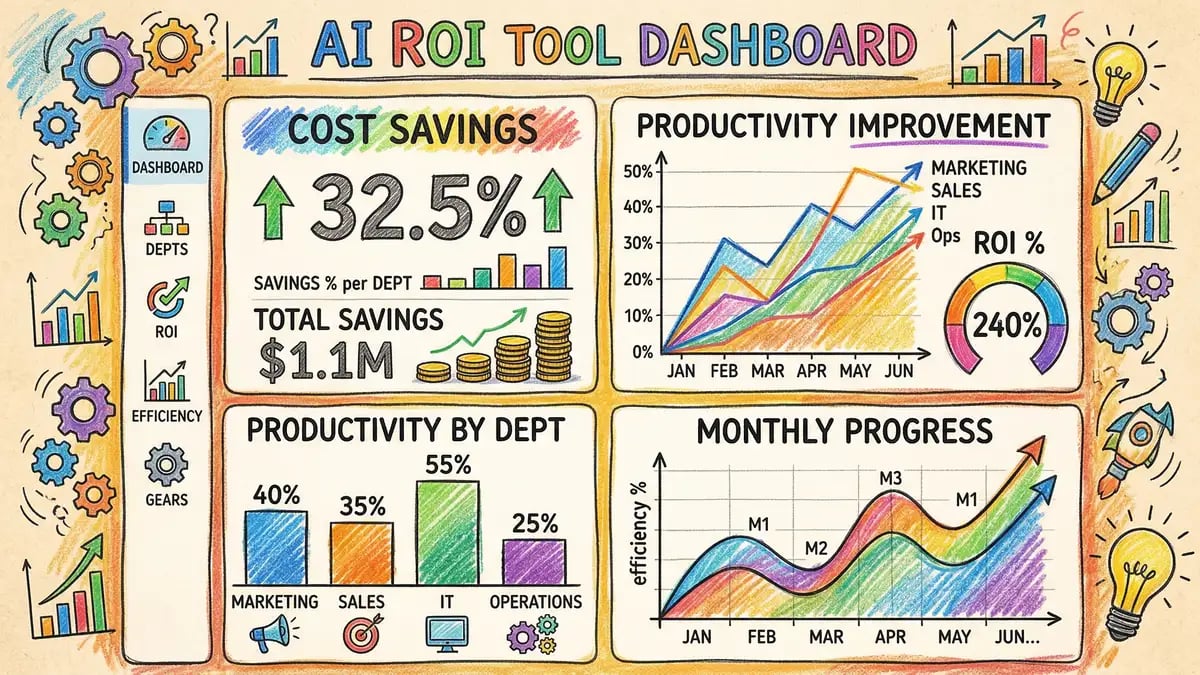
Code generation has matured from novelty to productivity multiplier. GitHub Copilot demonstrates a 55 per cent acceleration in task completion for developers using the tool versus baseline workflows. Alternatives include Tabnine, Amazon CodeWhisperer, and Claude for Code. The choice depends on your development stack and integration preferences.
Marketing and content creation show the highest adoption among business functions. Sixty per cent of marketers report daily AI tool usage, with 40–60 per cent time savings on content drafting, imagery generation, and campaign optimisation. Jasper, Copy.ai, and Canva's AI features dominate this segment, though foundation models (Claude, ChatGPT) are equally capable for bespoke content.
80%
Fortune 500 companies use generative AI
25%
UK businesses adopted AI (late 2025)
55%
Faster task completion with GitHub Copilot
Key Insight
Adopt tools on fit and integration, not hype. The best AI tool for your business is the one your teams will actually use within existing workflows. Implementation strategy matters more than the model.
Before evaluating tools, organisations benefit from a methodology that anchors which problem each tool is being asked to solve. Helium42's Education-to-Implementation Pathway places tool selection downstream of two earlier phases — leadership literacy and pilot design — so that the platforms chosen serve a defined outcome rather than the reverse. This Pathway distils our founders' experience of training more than 2,000 professionals across UK and DACH organisations. The evaluation framework that follows assumes this sequencing and helps you avoid selecting platforms before the use case is clear.
Which AI tools deliver the strongest ROI for different business functions?
Return on investment from AI varies sharply by function and use case. We separate realistic gains from aspirational estimates.
Sales teams see tangible benefits: conversation analysis, lead scoring, follow-up automation. Tools like Gong and revenue intelligence platforms use AI to identify deal signals and predict closure probability. ROI calculation: reduction in sales cycle length (typically 10–20 per cent) multiplied by deal velocity. For a team closing £500k annually, a 15 per cent cycle compression is £75k in accelerated revenue. Expect implementation in 6–8 weeks.
Customer support benefits from AI-powered ticketing and first-response automation. Zendesk, Freshdesk, and specialist platforms reduce handling time by 30–40 per cent for common queries. ROI is straightforward: support cost per ticket multiplied by resolved-volume uplift. Trade-off: customer satisfaction may dip if automation is poorly tuned.
Operations and process automation are lower-hype, higher-impact domains. RPA (Robotic Process Automation) combined with AI handles invoice processing, data entry, and compliance checks. Typical savings: 20–30 hours per week per process. Quantifying ROI for operational AI requires mapping current process costs and validating automation accuracy before full deployment.
Analytics and business intelligence gain speed from natural-language query interfaces. Tools that let non-technical staff ask "What was Q4 revenue by region?" and receive automated dashboards reduce dependency on analysts. Capex trade-off: lower analyst headcount versus higher platform licensing.
Cost Control Alert
Seventy-eight per cent of IT leaders report unexpected charges from AI features. Hybrid pricing (subscriptions plus usage-based) now dominates: 31 per cent of AI vendors use this model. Budget for variable costs and set per-user API limits to prevent bill shock.
What compliance and security factors should guide your choice?
Enterprise compliance is non-negotiable. Evaluate tools against your specific requirements: SOC 2 Type II certification, GDPR data residency, UK data protection rules, and industry-specific standards (NHS, financial services).
Data residency is increasingly critical for UK and EU users. Confirm whether the tool's underlying infrastructure (including training data storage and backup systems) operates within UK or EU jurisdictions. Many US-based platforms satisfy GDPR through standard contractual clauses, but regulatory appetite for this is tightening. If you handle sensitive data, verify residency explicitly with vendors before signing.
Model transparency matters for risk assessment. Understand whether your data is used to train or improve the model. OpenAI, Anthropic, and other major vendors offer business agreements that exclude training use, but this must be explicitly negotiated for enterprise contracts. Governance frameworks should document these agreements.
Output auditability is essential for regulated industries. If AI-generated content supports compliance decisions (e.g., regulatory reporting, risk assessment), you must be able to trace how the output was generated, which model version was used, and what inputs were provided. Commercial tools increasingly offer audit logs, but verify this capability during proof of concept.
Vendor stability and lock-in are underappreciated risks. Mid-market AI vendors have acquired, pivoted, or shut down rapidly. Confirm the vendor's funding, runway, and exit strategy. Prefer tools with open APIs and standardised interfaces (e.g., OpenAI-compatible endpoints) to minimise migration friction if your primary vendor faces issues.
Get Compliance Right From the Start
Talk to Our Team
How do you evaluate and pilot AI tools effectively?
Vendor demos are optimised for colour and ease. Real-world evaluation requires structured assessment.
Define success metrics before piloting. If you are adopting an AI tool for content creation, decide whether success is "30 per cent faster drafting" or "80 per cent of drafts require no revisions". If you are deploying a sales assistant, is it "50 per cent fewer manual follow-ups" or "15 per cent faster close rate"? Vague goals produce inconclusive pilots.
Start narrow and measure. Pick a single team, single workflow, and single tool. Run for 4–6 weeks. Track effort before and after (time logs, ticket velocity, draft turnaround). Interview users on friction points and false positives. Scale only if metrics support it.
Stress-test integrations. Most AI tool failures happen at the boundary: API failures, rate limiting, data format mismatches, slow feedback loops. In your pilot, deliberately trigger edge cases and failures. How does the system recover? Does it queue requests or drop them? Does it notify your team?
Document data flows and compliance gaps. Map where sensitive data enters the tool, how it is stored, whether it is logged, and how it is deleted. Share this with your security and compliance teams before committing budget. Early alignment prevents costly redesigns later.
We recommend structured training programmes alongside tool deployment. Tools fail not because they lack capability, but because teams have not internalised how to use them effectively.
Frequently Asked Questions
Which single tool should a small UK business start with?
ChatGPT Plus or Claude Pro. Both cost under £20 per user monthly, require no integration, and cover 80 per cent of real-world needs: document drafting, code review, brainstorming, customer inquiry response. No compliance overhead. Once your team has developed AI literacy and identified high-impact workflows, evaluate specialist tools. See our guide to AI for small business in the UK.
Is it cheaper to build custom AI than to license commercial tools?
Almost always no. Custom development requires skilled engineers, continuous fine-tuning, and operational overhead. Commercial tools amortise development and infrastructure costs across thousands of users. Build custom only when: (1) your workflow is proprietary and confidential, (2) you need bespoke model behaviour for compliance, or (3) commercial tools genuinely do not exist. For most businesses, pre-built tools with light customisation outperform custom builds.
What happens if my chosen vendor shuts down or pivots?
Lock-in risk is real. Mitigate by: (1) using open-source models or API-agnostic architectures where possible, (2) negotiating data export rights and API stability guarantees in contracts, (3) running pilots with multiple vendors simultaneously for critical workflows, (4) avoiding deep custom integrations with single-vendor platforms. Vendor consolidation is inevitable in AI; plan for transitions from the start.
How do you manage team resistance to AI tools?
Resistance is usually rational: staff fear job loss, distrust output quality, or resent imposed tools. Counter by: (1) explicitly stating that AI will augment, not replace roles, (2) demonstrating concrete time savings (not percentage claims), (3) involving teams in tool selection rather than imposing choices, (4) providing structured training and ongoing support, (5) celebrating early wins publicly. Training is your biggest lever.
Should we adopt an AI platform or best-of-breed tools across functions?
Platform (e.g., Salesforce Einstein, Microsoft Copilot Pro across 365) offers integration and single governance. Best-of-breed offers best-in-class capability per function. Hybrid is common: a platform for core workflows (CRM, ERP) plus specialist tools for high-impact functions (code generation, content). Choose platform if integration bandwidth is limited; choose best-of-breed if teams have strong existing tool preferences.
What is the typical cost and timeline for AI tool adoption?
For a mid-sized business (50–500 people): expect £50k–£500k annually in platform licensing, plus 6–12 weeks for pilot and deployment. Timeline depends on scope: single-team pilots with ChatGPT, 2–4 weeks; enterprise RPA with custom integration, 16–24 weeks. Budget for change management (training, documentation, governance setup) at 20–30 per cent of tool costs. Most organisations underestimate the change component.
Ready to Build Your AI Business Case?
We work with UK businesses to evaluate, pilot, and scale AI tools aligned with your operational goals and compliance posture. See our reality check on AI hype or book a discovery call to discuss your specific situation.
Book a Discovery CallSummary: Your AI Tools Adoption Roadmap
The breadth of AI tools available in 2026 is an asset and a liability. Without a clear evaluation framework, organisations waste budget on tools misaligned with workflows, compliance posture, or team capability. The most successful deployments we have seen follow this pattern:
- Start with high-confidence, high-impact workflows. If 60 per cent of your marketing team's time goes to draft content creation, that is your pilot. Measure time saved and quality. Do not chase novelty.
- Invest in governance and training alongside tools. A £5k tool deployed without training and governance will underperform a £500 tool with strong adoption support.
- Prioritise compliance and auditability early. Adding governance retrofitted is painful. Define your compliance requirements—SOC 2, GDPR, data residency, audit logging—before tool selection.
- Plan for vendor lock-in and obsolescence. Commercial AI is moving fast. Use open interfaces and maintain flexibility to swap tools when better alternatives emerge.
- Measure everything. Define success metrics upfront. If a pilot cannot show quantified gains in 8 weeks, do not scale it.
Our AI transformation playbook walks through this process in detail. For immediate practical support, talk to our team about your specific use cases.
Sources: Anthropic, OpenAI, GitHub Copilot productivity study, Gartner Enterprise AI adoption research, Office for National Statistics, DataForSEO AI trends 2026. AI training for your team AI tools for sales teams AI tools for marketing teams AI for business guide AI strategy guide AI for marketing guide AI tools for retail AI tools for construction AI tools for real estate AI for IT operations AI for construction estimating
AI consultancy firm comparison assess your AI readiness before adding more tools